

Ascension Cathedral — Almaty’s Timber Masterpiece — Where Orthodox Heritage, Timberwork & Seismic Ingenuity Meet
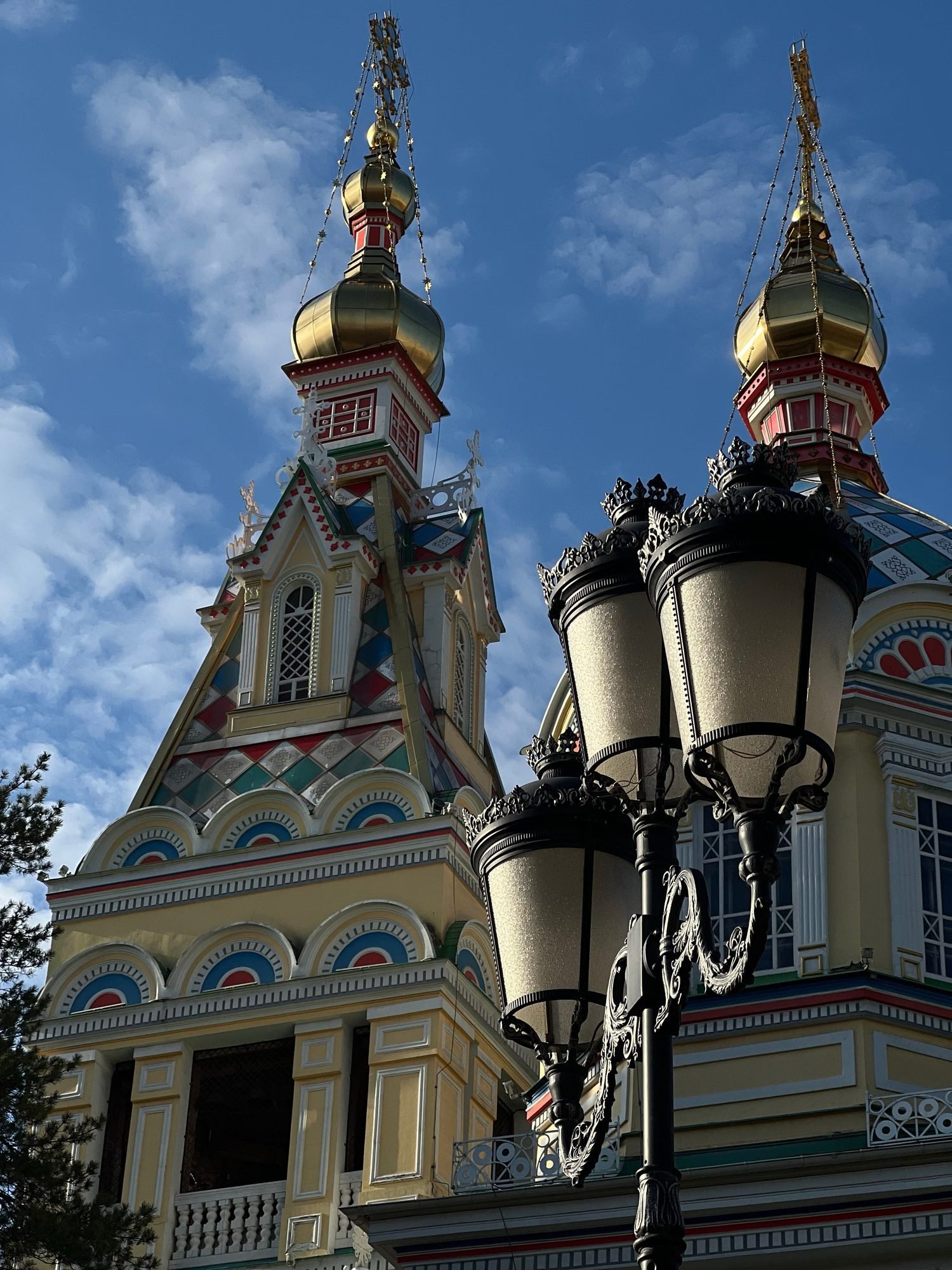
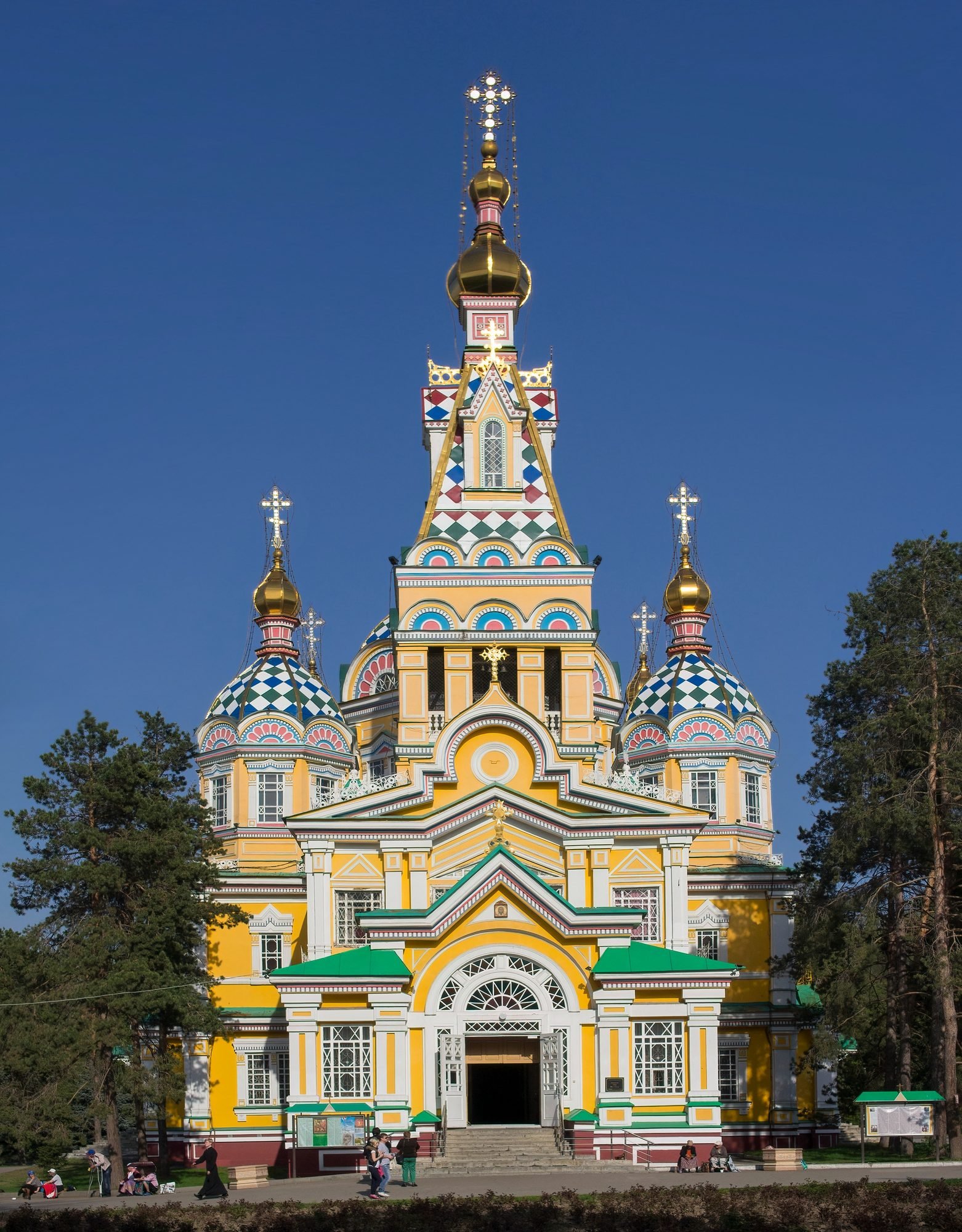
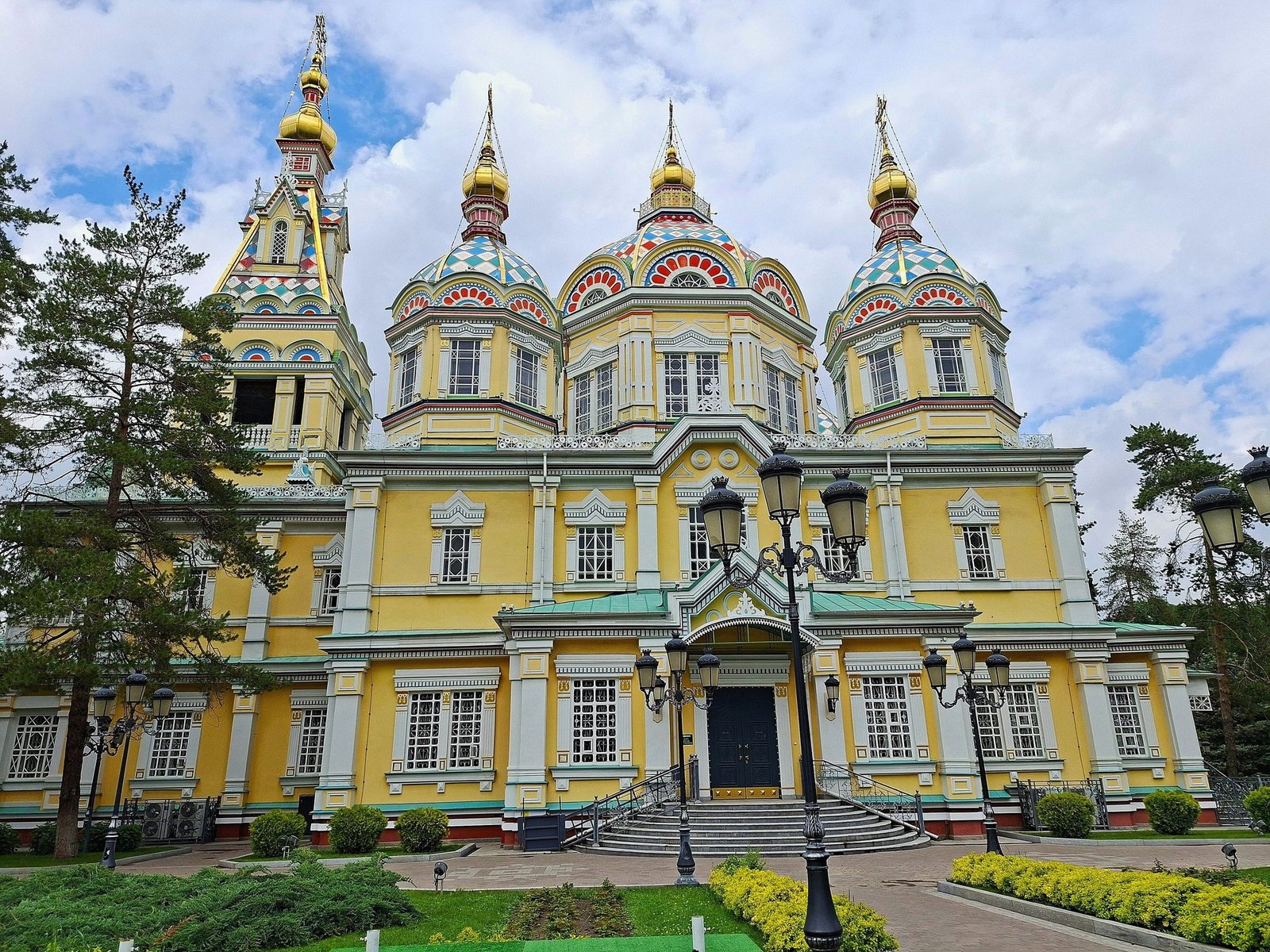
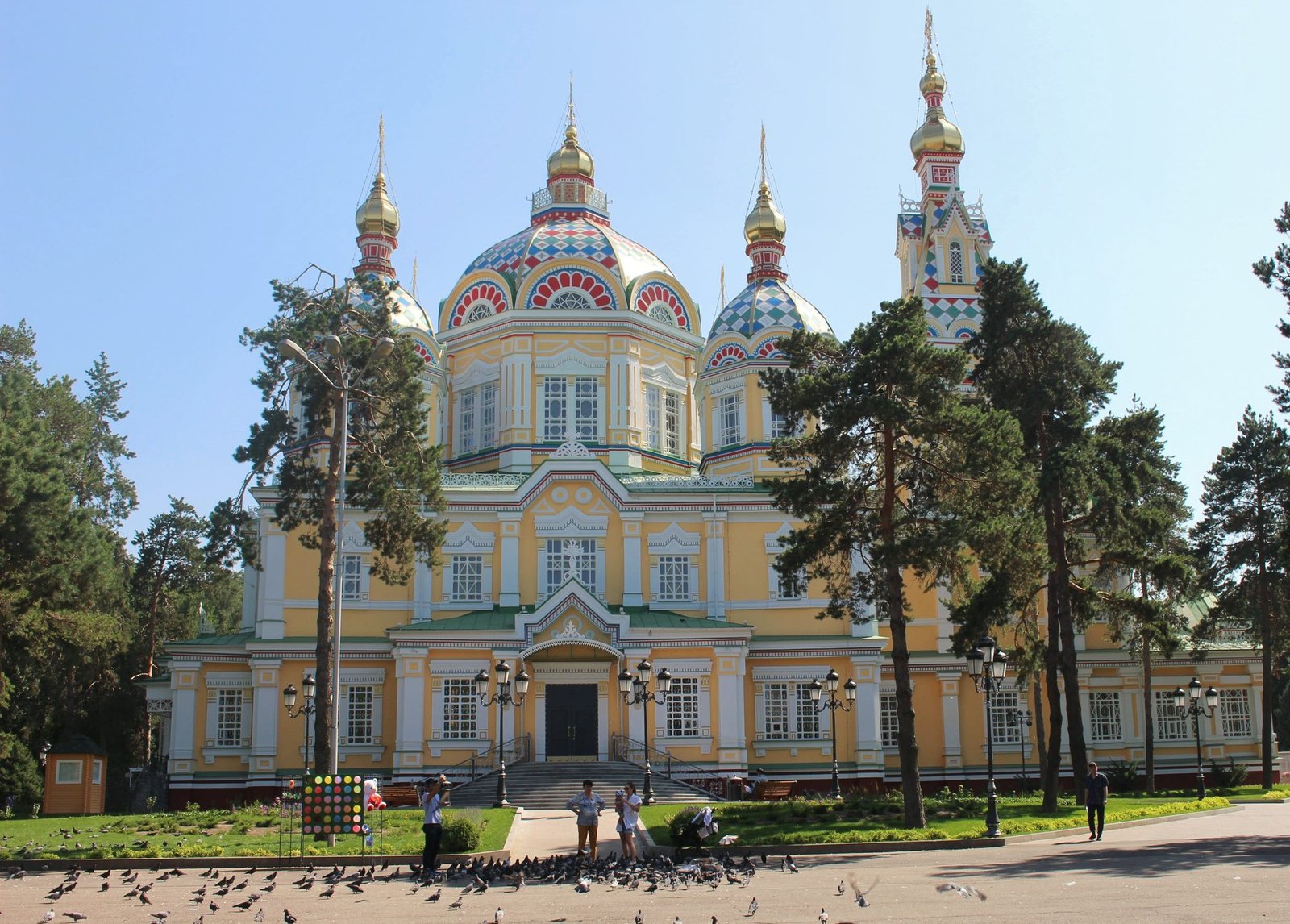
In the heart of Almaty, surrounded by the greenery of Panfilov Park, Ascension Cathedral rises with a distinctive combination of colourful domes, intricate detailing and remarkable timber craftsmanship. Also known as the Voznesensky Cathedral or Zenkov Cathedral, it is one of Kazakhstan’s best-known historic landmarks and an important example of early 20th-century timber architecture. Completed between 1904 and 1907, the cathedral belongs to the period when Almaty was known as Verny and was part of the Russian Empire. Its architectural importance lies not only in its role as an Orthodox place of worship, but also in the way its builders combined traditional ecclesiastical forms with an extensive timber structural system and engineering measures suited to a seismically active region. Today, it remains an active cathedral and an important part of Almaty’s historic landscape.

A Cathedral Takes Shape in Verny The story of Ascension Cathedral is closely connected with the development of Verny during the 19th century. As the city grew, so did its Orthodox community. In 1872, plans were initiated for a new cathedral following the establishment of the Turkestan Diocese and the growing importance of Verny as an administrative centre. An architectural competition was held in 1882, and a project by architect G. Serebrennikov was selected. Before the present cathedral could be built, however, Verny was struck by a major earthquake in 1887. The disaster caused widespread destruction and reinforced the importance of considering seismic conditions in the construction of major buildings.
The cathedral project was subsequently revised. In 1899, a design by architect K. A. Borisoglebsky was adopted. The project was later supplemented and partially redesigned by the prominent Verny architect and builder Andrei Pavlovich Zenkov. Construction began in 1904, and the cathedral was completed in 1907. The completed building introduced an imposing new landmark to Verny. Its vertical composition, domes, bell tower and detailed exterior gave it a strong presence within the growing city.
The Craft of Monumental Timber
The most distinctive quality of Ascension Cathedral is its extensive use of timber. UNESCO’s 2025 documentation identifies it as one of the tallest wooden Orthodox churches in the world and as an important example of monumental timber sacred architecture from the turn of the 19th and 20th centuries. The building demonstrates how timber could be used on a remarkable architectural scale. Its structural system incorporates wooden elements together with engineered connections and a substantial foundation. UNESCO highlights flexible joints, reinforced foundations and structural solutions adapted to seismic conditions as significant characteristics of the cathedral. The dimensions further demonstrate the ambition of the project. UNESCO records the height of the cross on the principal dome at approximately 39.6 metres and the bell tower at approximately 46 metres. Archaeology.kz gives the main dome cross as 39.63 metres and the bell tower as 44.2 metres, illustrating a modest difference between published measurements. For a magazine feature, the UNESCO figures are best presented as approximate measurements rather than absolute dimensions. The result is a building in which timber is not simply an ornamental material. It forms an essential part of the cathedral’s architectural and structural identity.
An Expression of Orthodox Architecture
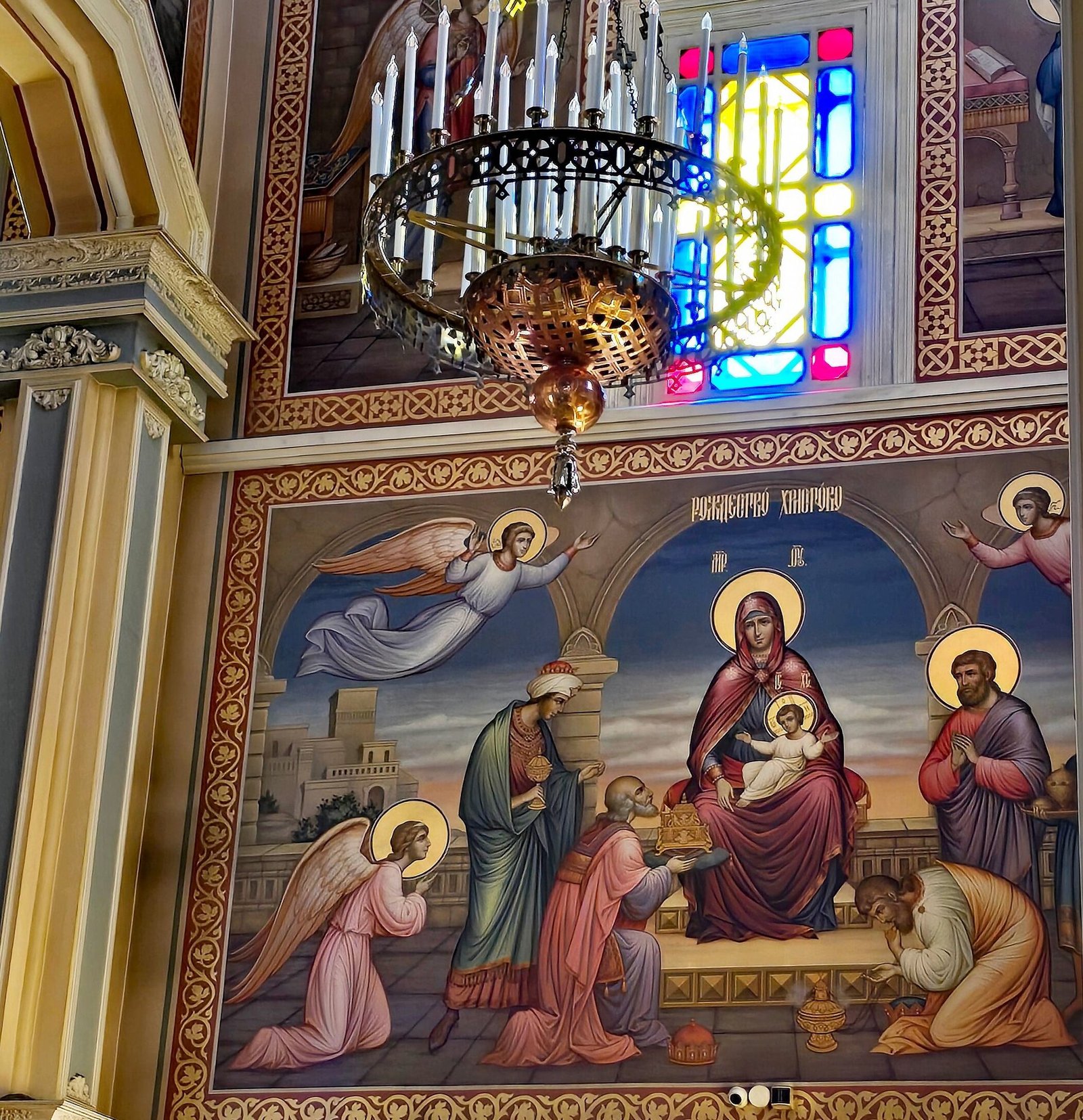
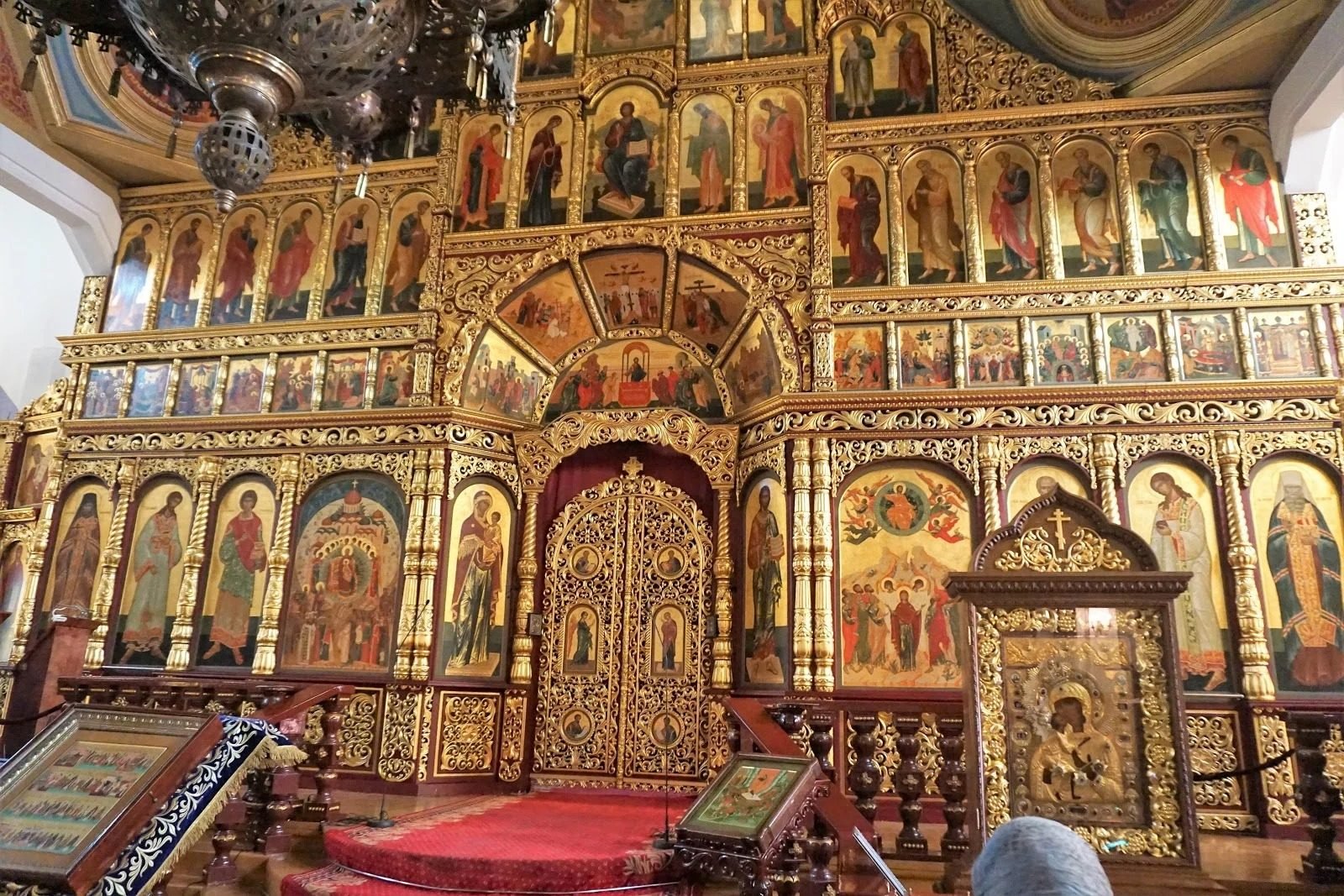
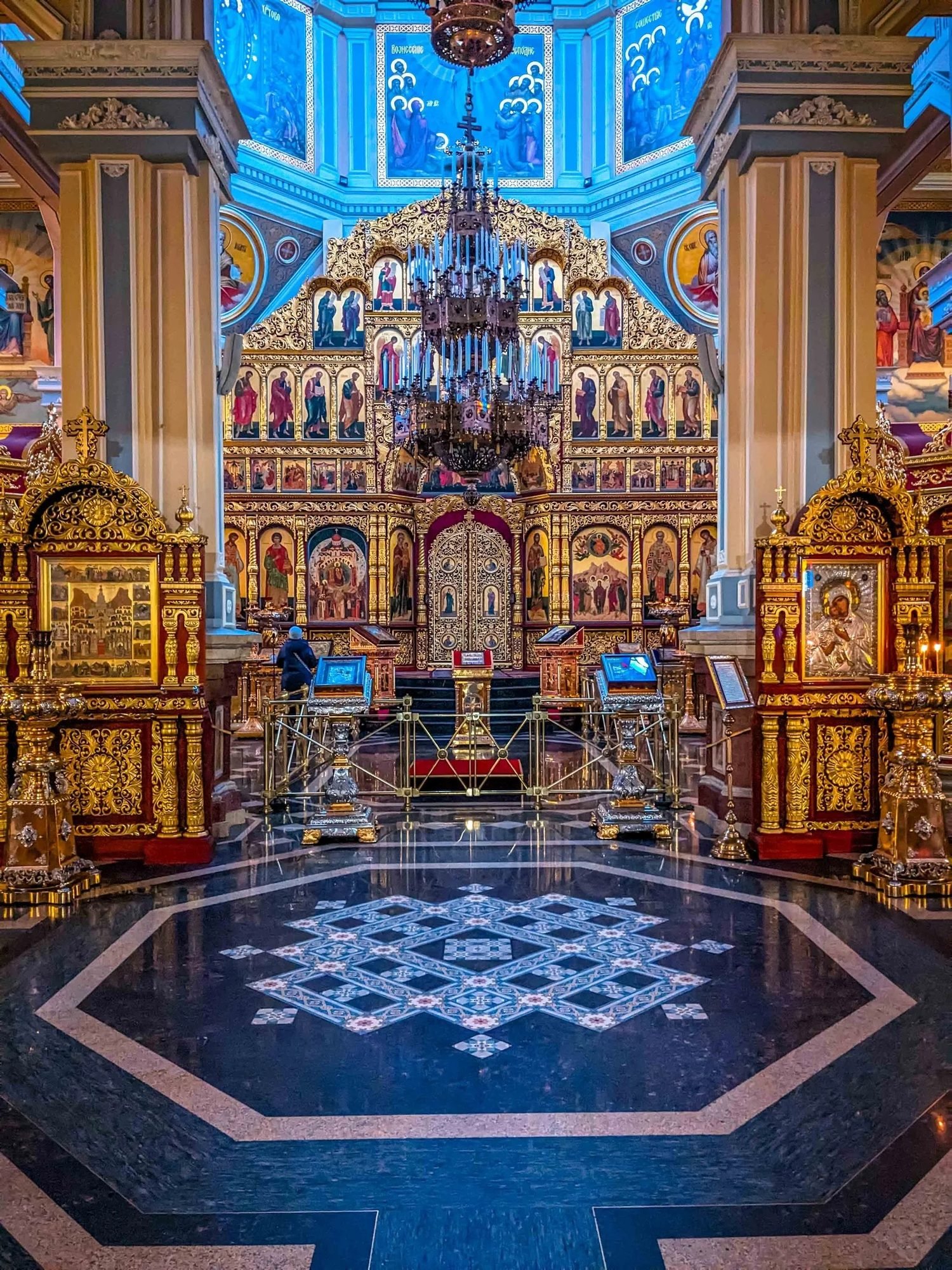
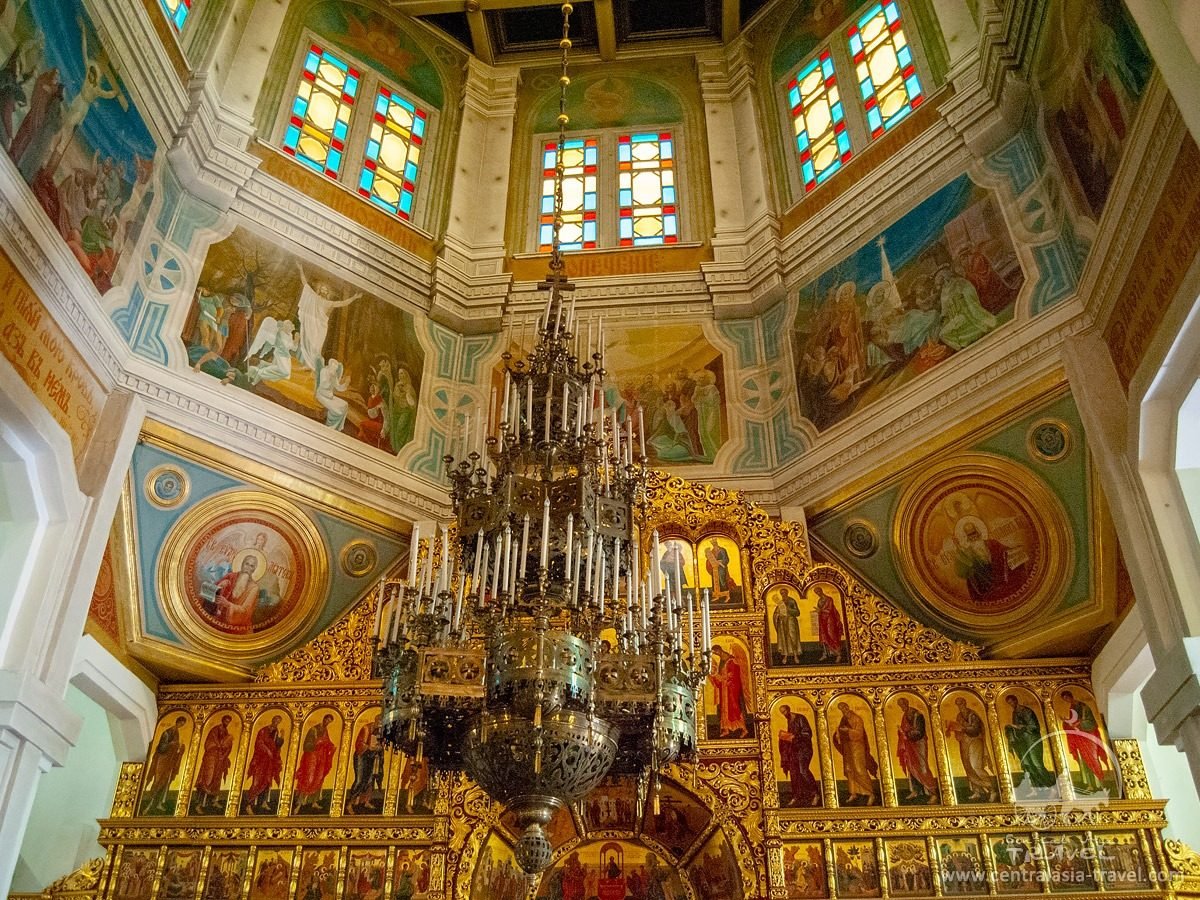
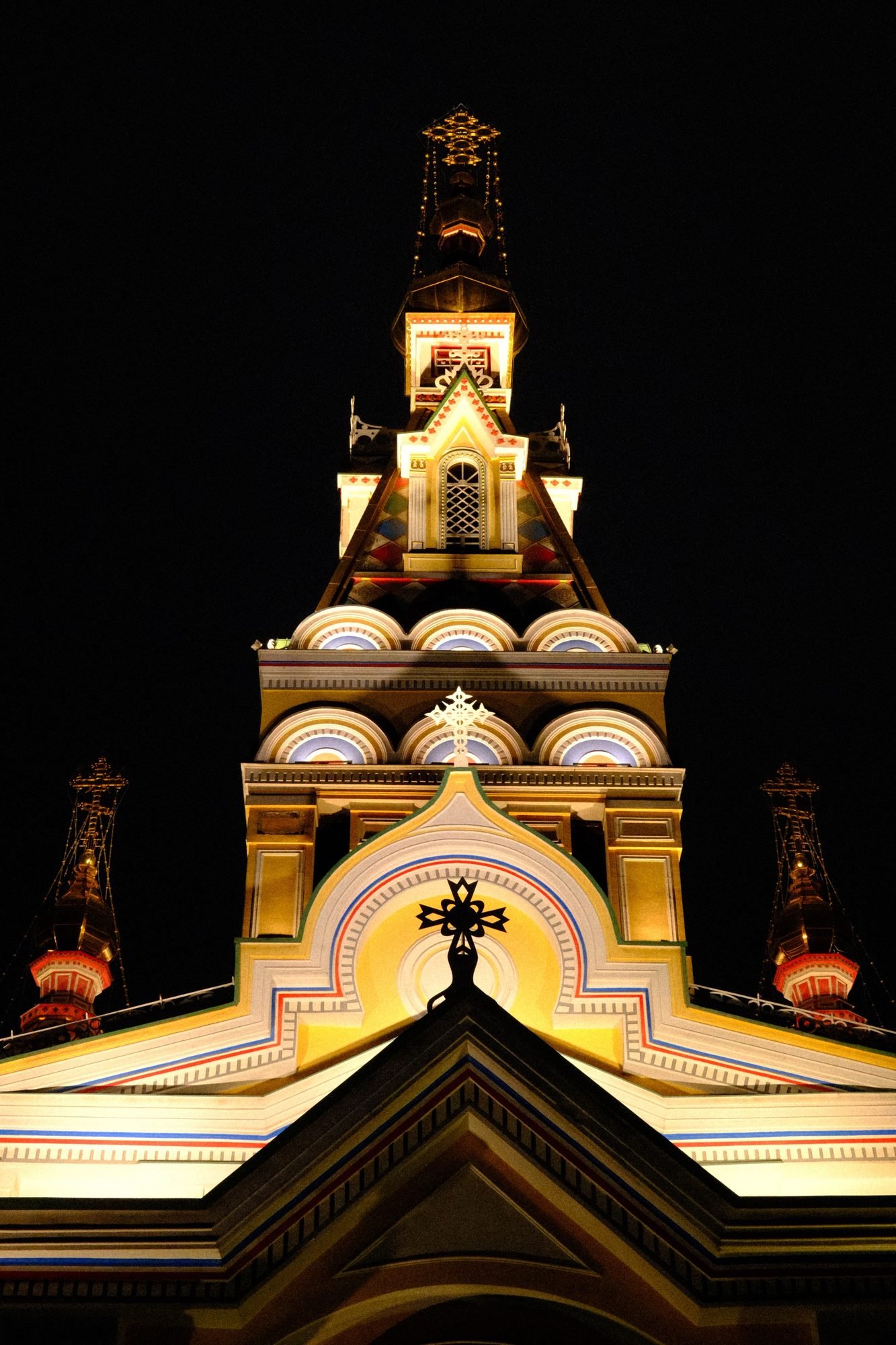
The cathedral’s engineering qualities are complemented by an architectural language rooted in Russian Orthodox tradition. Archaeology.kz describes the building as an example of the Russian architectural style of the early 20th century and notes its cruciform plan and longitudinally symmetrical layout. The main volume is crowned by five domes, while a separate bell tower contributes another strong vertical element. The domes are topped with crosses, and the exterior incorporates painted surfaces and detailed timber workmanship. The building’s appearance is particularly striking within Panfilov Park. The surrounding greenery provides a natural setting for its colourful façades and vertical forms, while the architectural details reward closer observation. Inside, the sacred character of the cathedral is expressed through icons, religious imagery and the iconostasis. Restoration work carried out after the building was returned to the Orthodox Church helped preserve and recover elements of its religious character.
Architecture & the Seismic Landscape
The cathedral’s engineering story is closely connected with the seismic environment of Almaty. The 1887 earthquake had already demonstrated the vulnerability of Verny’s buildings before the present cathedral was constructed. The new cathedral incorporated structural measures intended to improve its stability. UNESCO identifies its timber framework, reinforced foundations and joinery as significant elements of its response to seismic conditions. Archaeology.kz also records structural measures including reinforced components and an anti-seismic moat around the building. The cathedral’s performance was tested in 1911, when the major Kebin earthquake struck the region. UNESCO records the earthquake at approximately magnitude 7.7 and states that the cathedral survived with minimal damage.
This survival is an important part of the building’s architectural history. It demonstrates how the particular combination of timber construction, structural connections and foundations performed during a major seismic event. It should not be interpreted as meaning that timber construction by itself guarantees earthquake resistance; rather, the cathedral provides a documented historical example of construction adapted to a challenging seismic environment.
A Building Through Changing Times
The cathedral’s history continued through the political and social changes of the 20th century. During the Soviet period, religious institutions faced restrictions, and the cathedral was closed in 1929. Its use subsequently changed. According to UNESCO and Kazakhstan’s heritage documentation, the building accommodated the Central Museum of Kazakhstan, radio broadcasting facilities and other cultural and exhibition functions during different periods. Archaeology.kz records that significant alterations were also made to the interior during its museum period. Although its original religious function was suspended, the principal architectural structure survived. The building therefore remained an important part of Almaty’s urban landscape while taking on new roles. These changes are now part of the cathedral’s documented history. They add another layer to its significance as a building that has remained present through different periods of Kazakhstan’s development.
The Return of a Sacred Landmark
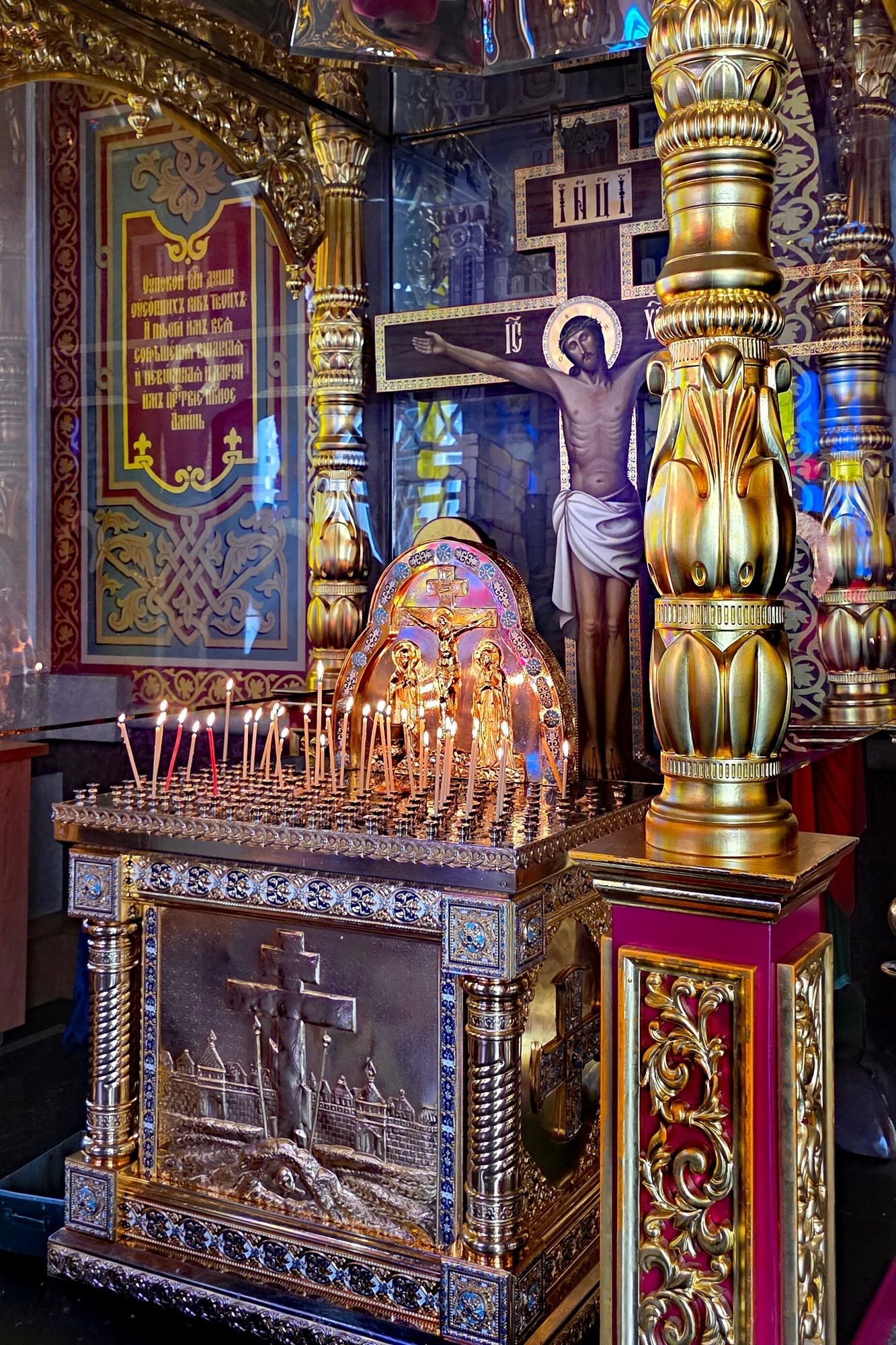
Following the end of the Soviet period, the cathedral gradually returned to religious use. Kazakhstan’s official heritage information records that the first religious service after the Soviet era took place in 1994, and the building was formally transferred to the Orthodox Church in 1995. Restoration followed. Archaeology.kz records restoration work between 1995 and 2002, including work on the building’s decoration and iconostasis. These interventions sought to conserve the historic structure while restoring its religious character. Today, Ascension Cathedral remains an active Orthodox place of worship. Its continuing religious function gives the historic building a living role within contemporary Almaty, while its architecture continues to attract visitors interested in the city’s cultural heritage.
A Place of International Heritage Interest
Ascension Cathedral’s significance has also received international heritage recognition through Kazakhstan’s UNESCO Tentative List submissions. In 2025, Kazakhstan included the cathedral in the proposed serial property “Sacred Timber Architecture of Central Asia: Islamic and Christian Traditions at the Turn of the 19th–20th Centuries.” The proposal places Ascension Cathedral alongside the Jarkent Mosque, presenting both as significant examples of monumental timber sacred architecture from the same broad historical period. The cathedral was also included in the 2025 Tentative List proposal “Architectural Resilience: The Anti-seismic Heritage of Almaty.” This proposal considers a group of Almaty buildings representing different stages in the development of architecture and engineering adapted to seismic conditions.
There is an important distinction to make: a UNESCO Tentative List entry is not the same as World Heritage inscription. UNESCO describes Tentative Lists as inventories of properties that countries intend to consider for possible nomination. Ascension Cathedral is therefore not currently a UNESCO World Heritage Site. Its inclusion on the Tentative List nevertheless places the cathedral within Kazakhstan’s ongoing consideration of significant architectural and cultural heritage.
A Living Legacy in Almaty
More than a century after its completion, Ascension Cathedral remains a distinctive presence in Almaty. Its colourful domes, carefully crafted timber structure and historic setting in Panfilov Park continue to connect the modern city with the architectural traditions of Verny. Its significance rests on several interconnected qualities. It is a place of Orthodox worship, a major example of early 20th-century timber architecture and a documented example of construction adapted to the seismic environment of southeastern Kazakhstan. Its history also reflects the changing circumstances of the city itself. From its construction in the final years of Verny, through the earthquake of 1911, the changing functions of the Soviet period and its return to religious use after independence, the cathedral has remained a visible part of Almaty’s story.
What makes the building particularly compelling is the way faith, craftsmanship and engineering come together within one architectural work. Its timber structure demonstrates the possibilities of skilled construction; its domes and interior preserve a distinctive religious tradition; and its structural design reflects the practical demands of its geographical setting. Today, beneath the trees of Panfilov Park, Ascension Cathedral continues to serve its religious community while preserving an important chapter of Kazakhstan’s architectural heritage. Its enduring presence offers a tangible connection between Almaty’s past and present a remarkable timber landmark whose history is inseparable from the city around it.
More to Read
All issues
Tower of the Sun
A Futuristic Vision Rising Across Astana’s Ishim River
Hazret Sultan Mosque — A Monument of Faith & Kazakh Heritage in Astana
Rising prominently on the right bank of the Yesil River, the Hazret Sultan Mosque is among the most recognisable religious and architectural landmarks of Astana,…
The National Museum of Kazakhstan — Preserving the Soul of the Great Steppe
The National Museum of the Republic of Kazakhstan stands as one of Central Asia’s most prestigious cultural institutions, preserving the remarkable story of a nation…