

The Editor’s Letter
From the desk of the Editor-in-Chief · July 2026, Volume 03, Issue 03.
The Incredible Kazakhstan Is Shaping Modern Cities Through Innovation, Sustainability & Global Vision
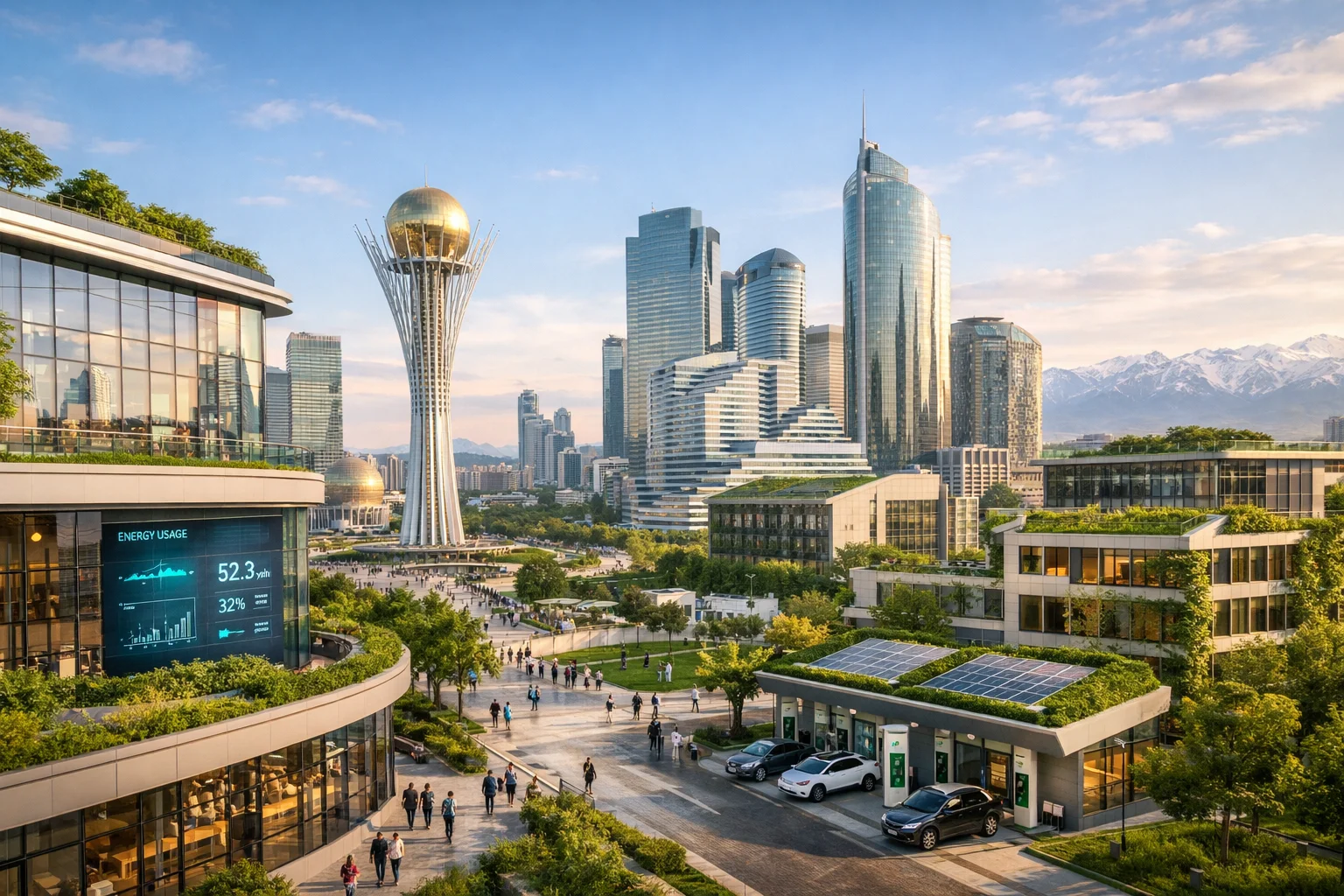
Urbanization is the defining narrative of the twenty-first century. As billions of people converge upon global metropolitan areas, cities have transformed into the primary battlegrounds for human progress, environmental resilience, and technological integration. For decades, the templates for modern urban development were dictated by Western megacities or the hyper-dense, vertical hubs of East Asia. Kazakhstan, traditionally celebrated for its vast steppes, deep cultural heritage, and critical geopolitical position along the ancient Silk Road has quietly established itself as an avant-garde laboratory for twenty-first-century urbanism. Through a deliberate synthesis of architectural audacity, green technology, and digital governance, the nation is redefining what it means to build, manage, and inhabit a modern metropolis. From Conventional Villages to a Most Renowned Smart Capital: To understand Kazakhstan's contemporary urban triumph, one must first look to its capital, Astana. The relocation of the capital in 1997 from the southern enclave of Almaty to the windswept northern plains was initially met with widespread scepticisms. Critics questioned the feasibility of building a world-class city in a region defined by extreme climate swings, where winters routinely drop below minus forty degrees Celsius. What transpired over the next three decades defied conventional expectations. Under a master plan originally conceived by the legendary Japanese architect Kisho Kurokawa, Astana was designed not merely as an administrative outpost, but as a symbolic and literal manifestation of a forward-looking state.
Digitization and the Smart City Framework:
Urban innovation in Kazakhstan extends far beyond striking skylines. The true transformation resides in the invisible digital nervous systems driving its municipalities. Through national initiatives like "Digital Kazakhstan," the country has systematically retrofitted its urban centres with advanced data ecosystems, artificial intelligence, and Internet of Things frameworks. The Smart Astana Initiative. The capital has become a primary testing ground for automated municipal management. By deploying thousands of interconnected sensors across the urban grid, the city actively monitors and optimizes traffic flow, street lighting, and waste management. Unified Resident Platforms: The introduction of comprehensive civic service applications allows residents to access hundreds of municipal services, track public transit in real-time, pay utilities, and report infrastructural maintenance needs directly to city hall.
This digitization has dismantled traditional bureaucratic barriers, fostering a transparent and participatory urban culture. Almaty: The Tech Hub of the South Simultaneously, Almaty Kazakhstan’s largest metropolis and historical cultural centre has charted its own path as a premier regional technology hub. Nestled against the Ile Alatau mountains, Almaty faces unique spatial and environmental constraints. In response, the city has utilized data-driven urban planning to manage its densification. High-resolution air quality monitoring networks, predictive seismic modelling, and digital twin technologies allow urban planners to simulate the environmental impact of new high-rise developments before construction begins. This ensures that the natural air corridors flowing from the mountains into the valley remain unobstructed, mitigating the urban heat island effect and reducing smog accumulation.
Sustainability as an Urban-Imperative: In an era defined by accelerating climate change, Kazakhstan’s urban vision is deeply rooted in environmental responsibility. As a major energy producer, the nation’s explicit pivot toward green urbanism represents a bold commitment to sustainable development. Throughout Almaty, Astana, and rising industrial centres like Shymkent, sustainability is being woven directly into the public landscape. Extensive pedestrianization projects, the rapid expansion of dedicated cycling lanes, and the systematic electrification of public transit fleets are fundamentally changing how citizens navigate their environments. Global-Vision and the Intersection of Commerce: A city cannot thrive in isolation. Kazakhstan’s urban methodology is explicitly designed to position its cities as vital nodes in the global economic architecture. By capitalizing on its strategic location between Europe and Asia, the country has engineered specialized urban zones optimized for international commerce, finance, and logistics. By embedding a world-class financial hub directly into the urban core, Kazakhstan has successfully attracted premier international banking, fintech, and venture capital firms, effectively turning its capital into the financial gateway to Central Asia.
Cultivating-Inclusivity, Heritage and
Human-Capital. While technological integration and architectural innovation are vital, the ultimate measure of any modern city is its liveability and human-centric design. Kazakhstan's urban strategy places great emphasis on cultivating social cohesion, celebrating cultural diversity, and nurturing human capital. Kazakhstan is home to over 130 distinct ethnic groups, and its cities are deliberately designed to reflect this pluralism. Public spaces, parks, and cultural centres are engineered to serve as inclusive community venues that foster social interaction and civic pride. The architectural design across the nation frequently honours its nomadic heritage, integrating traditional motifs and geometric patterns into contemporary structures. Simultaneously, the nation is investing heavily in the minds that will power these future cities. By establishing elite educational institutions like Nazarbayev University in Astana, alongside a growing network of specialized technical colleges and incubation centres, Kazakhstan is retaining top domestic talent while attracting international researchers.
These academic campuses are deeply integrated into their local economies, running collaborative labs with municipal governments to solve real-world urban challenges in waste management, renewable energy microgrids, and automated public administration. The Horizon of Eurasian Urbanism: The story of Kazakhstan’s cities is a compelling narrative of ambition, resilience, and strategic clarity. By reimagining its urban landscapes, the nation has proven that geography and climate are not insurmountable barriers to development, but unique catalysts for creative problem-solving. As we look toward an increasingly urbanized future, the lessons emerging from Astana, Almaty, and Khorgos are universally relevant. Kazakhstan has demonstrated that the ideal modern city is not merely a collection of steel and concrete, nor an unfeeling digital grid.
Rather, it is a dynamic, living ecosystem where advanced technology enhances human well-being, where sustainable infrastructure preserves the natural world, and where global vision opens doors to shared international prosperity. For urban planners, policymakers, and global citizens watching this transformation unfold, Kazakhstan offers more than just a model of rapid growth. It presents a sophisticated, inspiring blueprint for the future of human habitation an enduring testament to how a nation can honour its rich history while confidently engineering a sustainable, connected tomorrow.
Dr. S. E. Alexander
Global Media Chief & MD