

Nazym Karpikova — Reframing Kazakh Heritage for the Global Runway
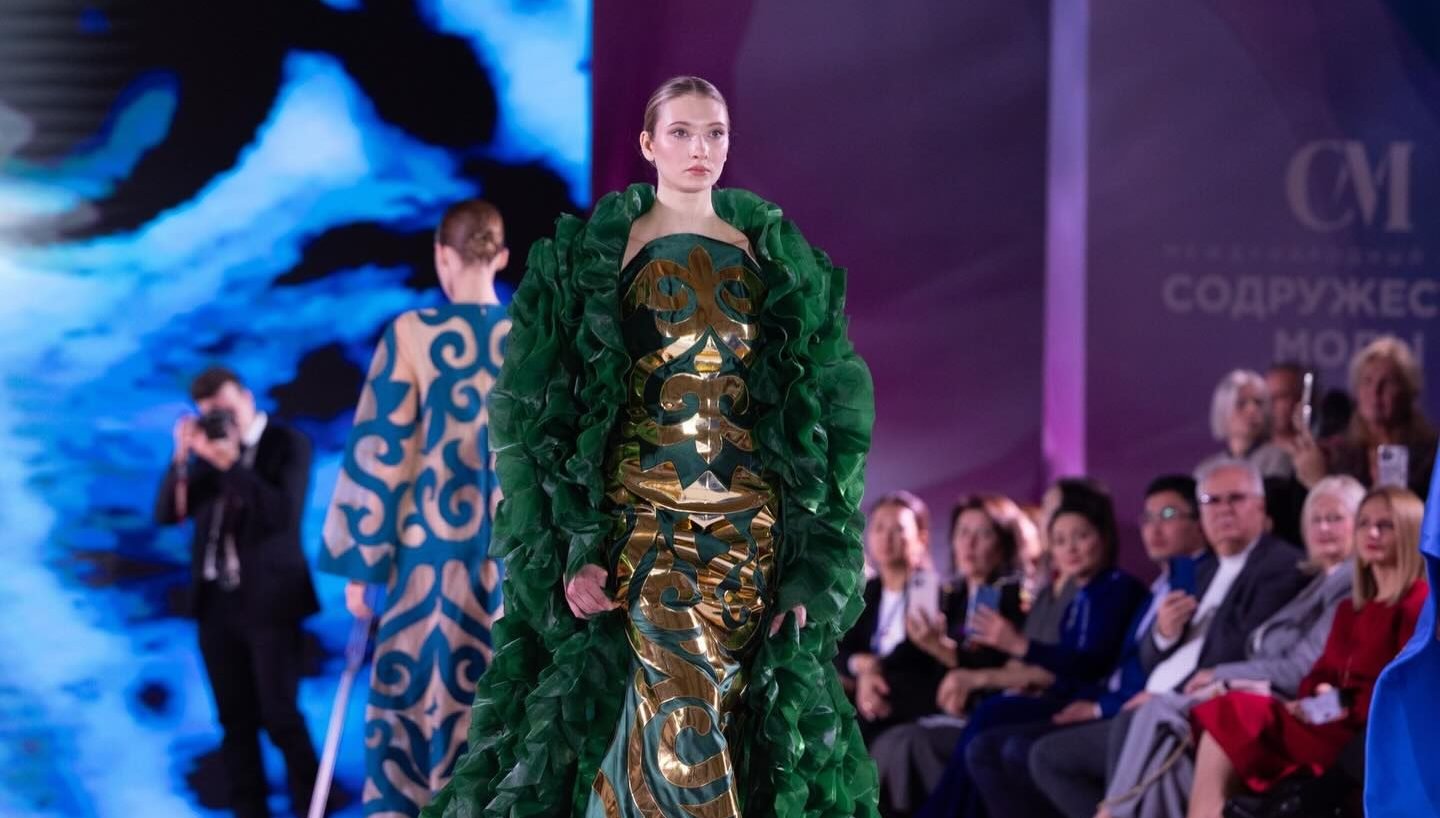
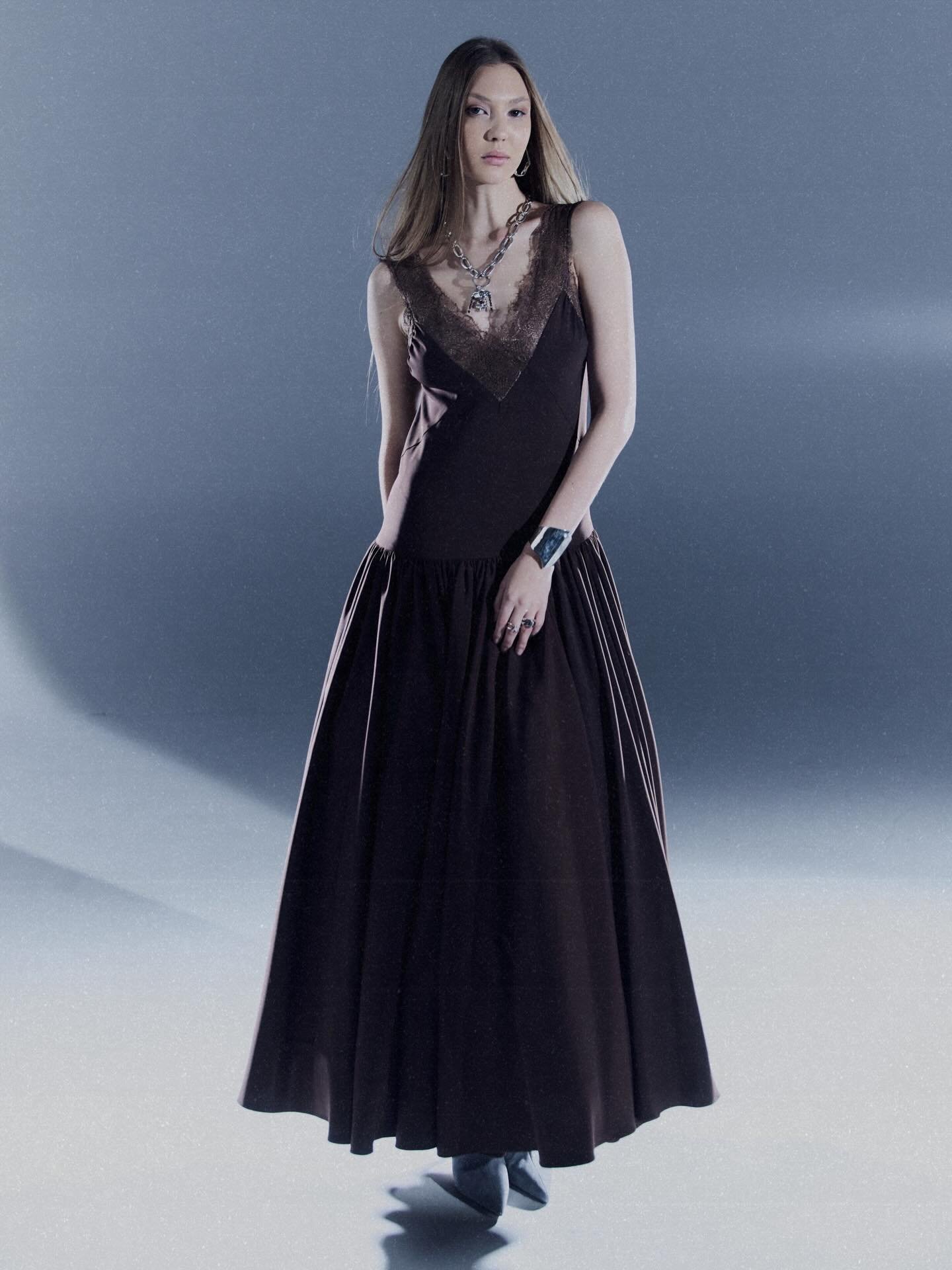
From Almaty to Paris, designer Nazym Karpikova has built a distinctive couture language that moves between heritage and modernity, ornament and restraint, tradition and experimentation. Through ARUNAZ ATELIER, she is not merely presenting Kazakh references to the world—she is interrogating how cultural memory can exist within contemporary fashion. A model emerges onto the runway dressed entirely in black. At first glance, the silhouette appears restrained, almost severe. Then the details begin to reveal themselves. An asymmetric line interrupts the expected geometry of the garment. Layers of texture catch the light differently with each step. Tailoring sharpens the structure while softness lingers at the edges. The look is monochromatic, yet anything but simple. This tension—between simplicity and complexity, tradition and innovation, familiarity and surprise—has become one of the defining signatures of Nazym Karpikova. For audiences encountering her work for the first time, the immediate impression is often one of precision. Her garments possess a deliberate clarity. Yet beneath that clarity lies a deeper conversation about identity, craftsmanship, and the ways cultural memory can be translated into contemporary form.
Karpikova is not interested in reproducing heritage as costume. Nor is she willing to abandon it in pursuit of global relevance. Instead, she occupies the difficult space between the two. As the designer and founder of ARUNAZ ATELIER, Karpikova has steadily established herself as one of the most internationally visible voices emerging from Kazakhstan’s fashion landscape. Her collections have appeared on runways in Paris, Tokyo, Milan, Berlin, and Baku. Yet the more compelling story is not where her work has traveled. It is how she has developed a creative language capable of carrying both local history and contemporary ambition within the same garment. To understand Nazym Karpikova is to understand a designer committed to exploring complexity rather than resolving it.
The Woman Behind the Vision

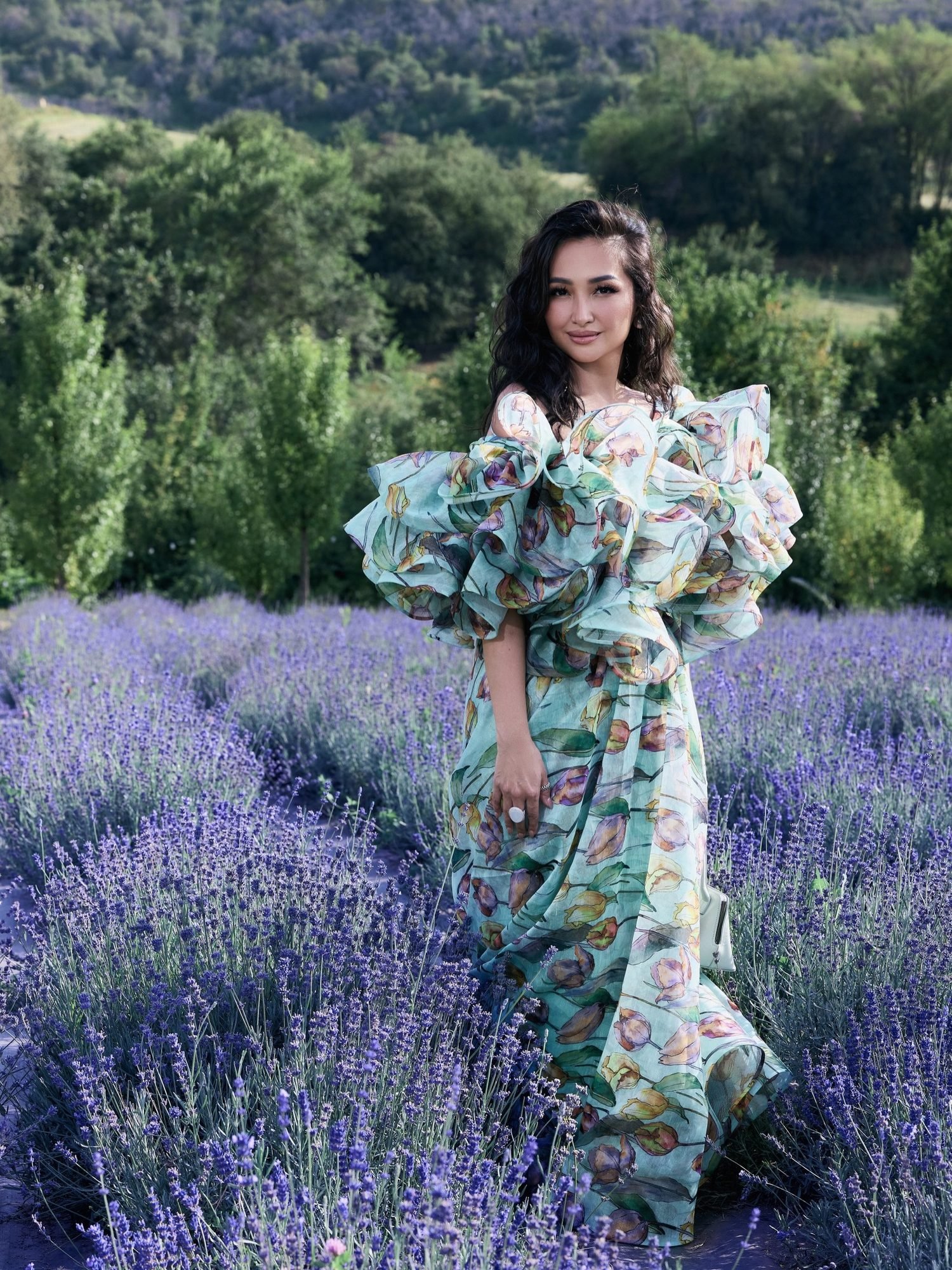
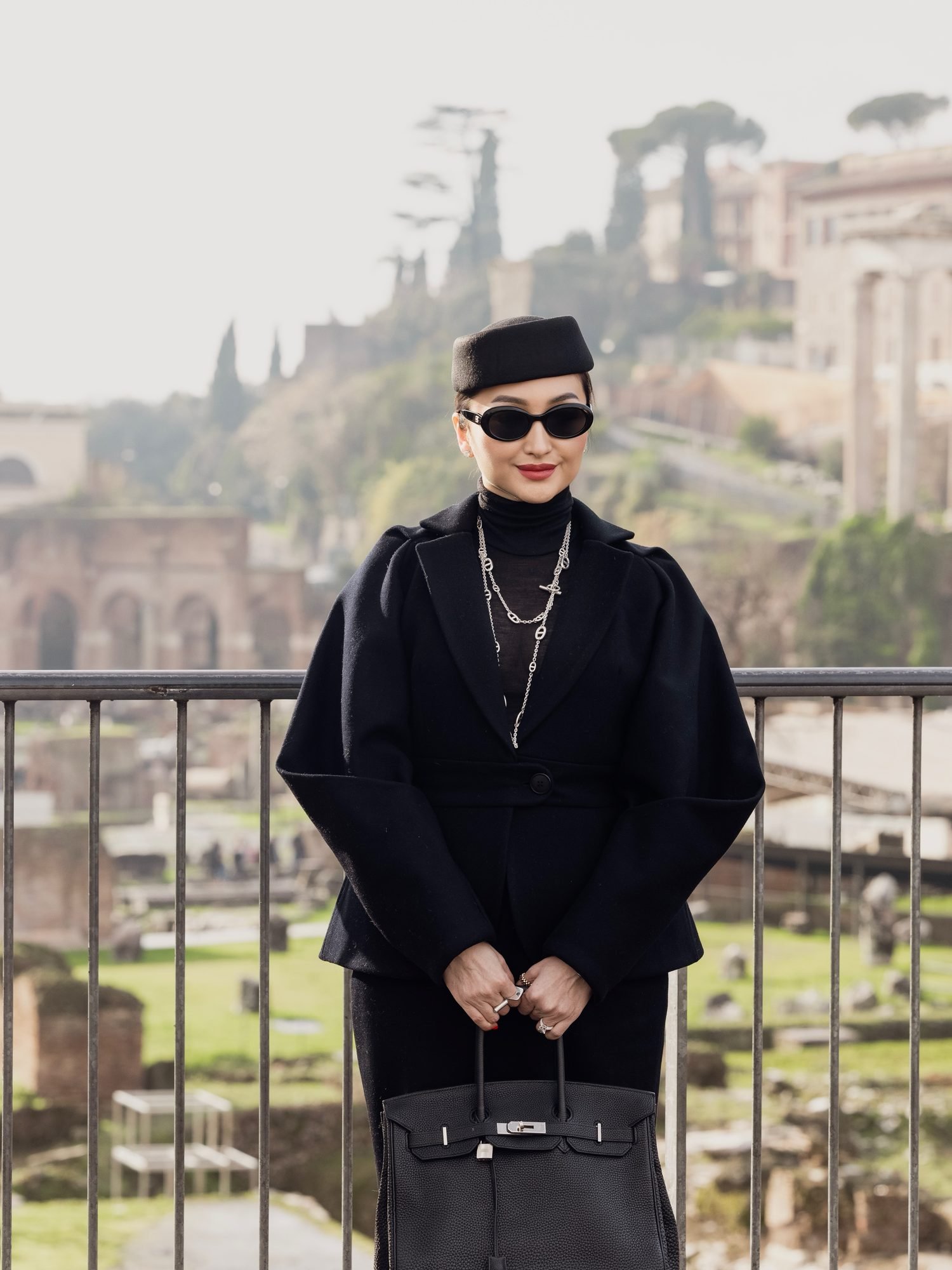
Nazym Karpikova belongs to a generation of designers working outside fashion’s traditional power centers while refusing to be defined by geographic distance from them. Based in Almaty, she has built her creative identity around a conviction that the artistic traditions of Kazakhstan deserve a meaningful place within international fashion discourse. This belief forms the foundation of her work, but it is expressed with nuance rather than nostalgia. Karpikova frequently draws from practices deeply embedded within Kazakh cultural heritage, including patchwork techniques, quilting traditions, and ornamental forms passed through generations of artisans. Yet she approaches these references as living creative resources rather than historical artifacts. For her, tradition is not something preserved behind glass. It is material to be reinterpreted. Her philosophy reveals a designer interested as much in psychology as aesthetics. According to her own descriptions, her collections seek to reveal “a multifaceted universe of the woman’s inner world.”
This perspective helps explain why her work often resists straightforward categorization. The garments are not designed merely to decorate. They are intended to express emotional and intellectual complexity. Equally revealing is her belief that minimalism itself can be “deep and multifaceted.” In an industry that often associates richness with visual excess, Karpikova proposes an alternative idea. Restraint, in her hands, becomes a vehicle for depth. Her exploration of monochrome demonstrates this particularly clearly. She has argued that even a single color can generate “a wealth of textures and forms.” What appears simple on the surface becomes intricate through construction, material choice, and silhouette. The women she designs for reflect this worldview. They are neither defined by trend cycles nor constrained by conventional notions of femininity. Instead, Karpikova’s garments suggest a woman comfortable with contradiction—strong yet vulnerable, disciplined yet expressive, contemporary yet connected to history. The designer’s understanding of womanhood is layered rather than singular, and her collections consistently return to that idea.
Building a Creative Language
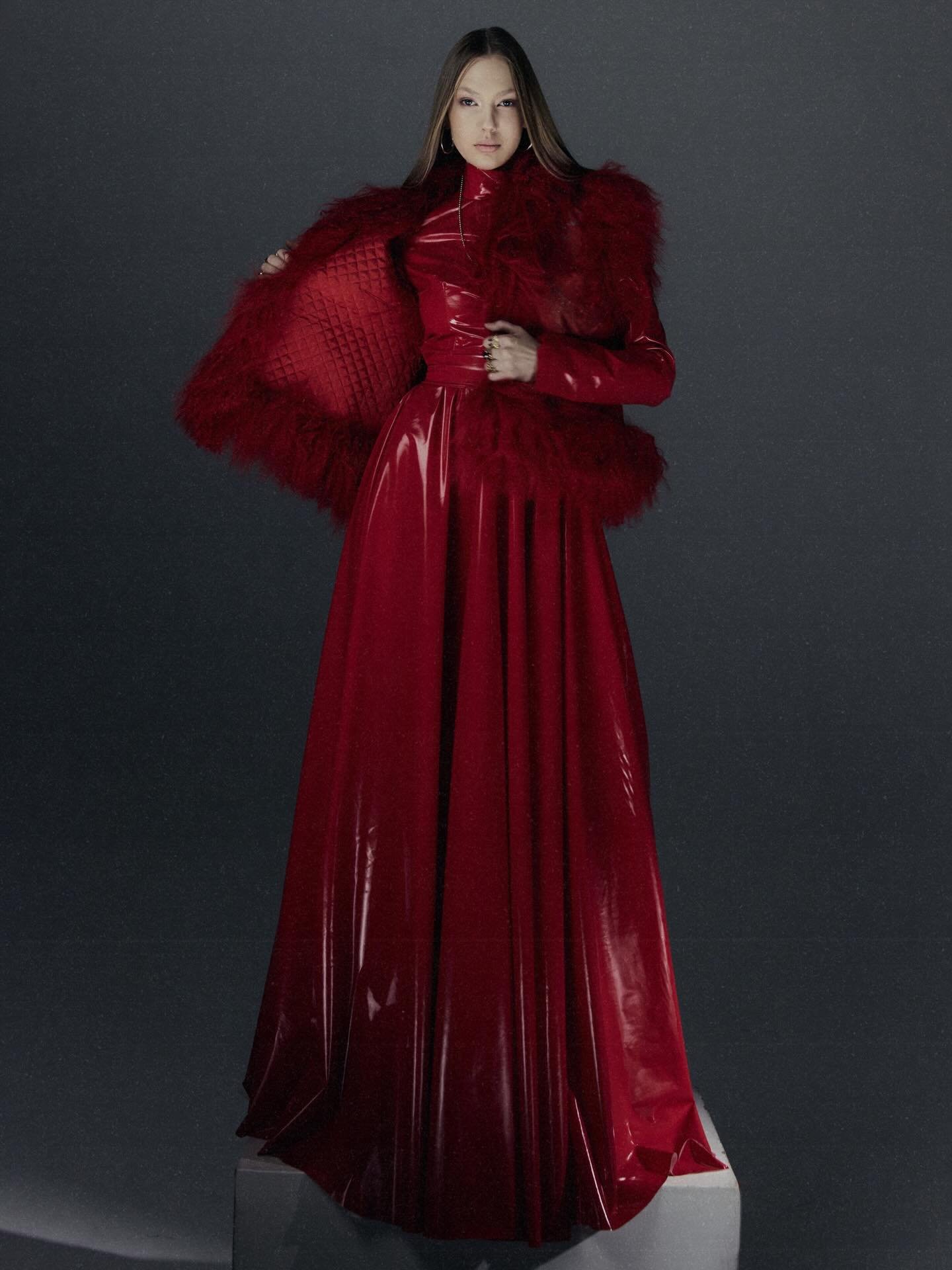
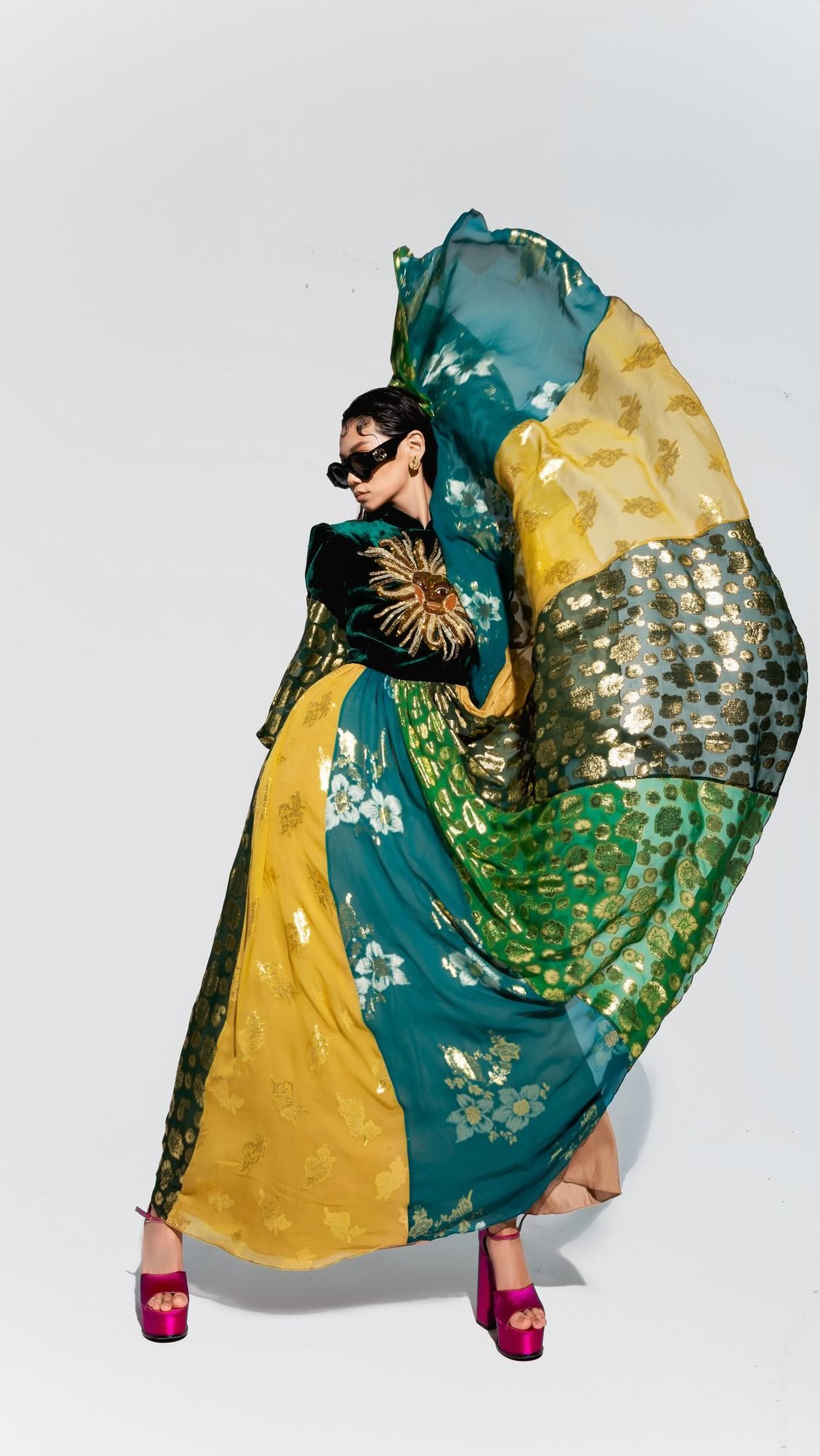
The most interesting aspect of Nazym Karpikova’s work may be the way she navigates opposing forces without allowing either side to dominate. Many designers working with cultural heritage face a recurring challenge. Lean too heavily into tradition and the work risks becoming folkloric. Move too far toward international minimalism and cultural specificity disappears altogether. Karpikova’s practice exists within this tension. Her design vocabulary incorporates elements commonly associated with ethno-style fashion, yet these references rarely function as decorative gestures alone. Traditional influences become integrated into the architecture of garments themselves. Asymmetric silhouettes play a particularly important role in her work. They introduce movement and unpredictability, disrupting visual expectations while preserving elegance. Complex tailoring provides structure, creating garments that feel contemporary even when informed by historical references.
Ornamental elements also appear throughout her collections, though often with notable restraint. Rather than overwhelming a design, they operate as points of emphasis, drawing attention to craftsmanship and construction. Fabric functions as a narrative medium within Karpikova’s creative process. Texture becomes a language in its own right. Contrasts between surfaces create visual dialogue, allowing garments to communicate complexity without relying on overt embellishment. This approach becomes especially significant when examining her engagement with patchwork and quilting traditions. In many contexts, these techniques are treated as decorative additions. Karpikova approaches them differently. For her, patchwork appears less as ornament than philosophy. Patchwork inherently involves the bringing together of separate fragments into a coherent whole. It reflects ideas of memory, continuity, and transformation.

Within Karpikova’s work, this concept extends beyond technique. It becomes a way of thinking about identity itself. Cultural heritage, contemporary experience, personal expression, and collective history are assembled into new forms. The evolution of her aesthetic reveals increasing confidence in this approach. Earlier collections presented at Kazakh Fashion Week demonstrated a strong engagement with ethno-cultural influences and traditional references. These works established the foundations of her creative identity. Yet as her international presence expanded, her visual language also became more distilled. The monochrome collections shown in Paris illustrate this shift particularly well. Black-and-white palettes reduced visual distraction, placing greater emphasis on silhouette, proportion, texture, and construction. Rather than abandoning her roots, Karpikova refined the methods through which they were expressed. The result is an aesthetic that feels simultaneously grounded and international—a difficult balance few designers achieve successfully.
The International Runway
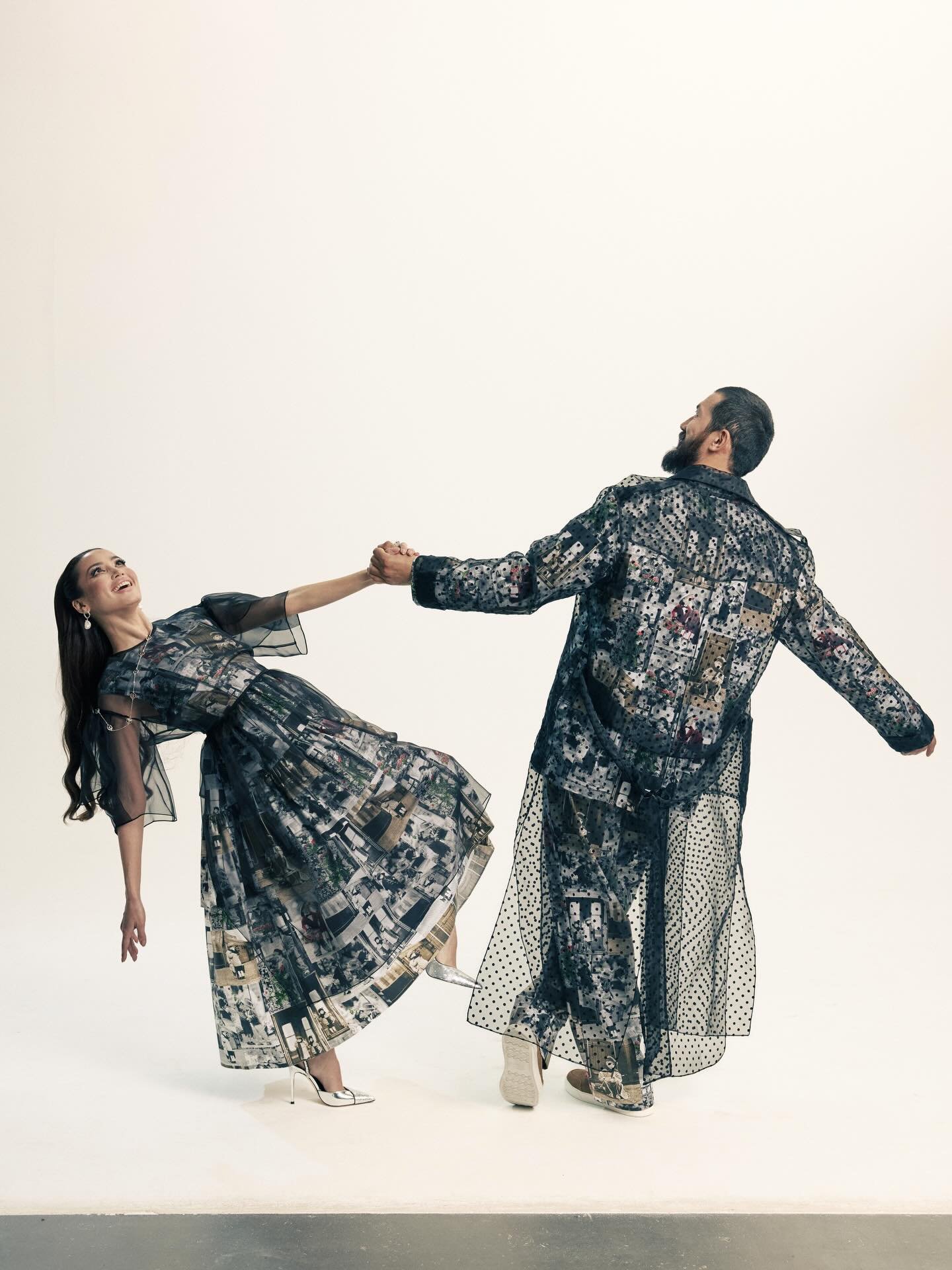
For Nazym Karpikova, international recognition has arrived through a series of increasingly significant stages, each demanding new forms of creative discipline. At Paris Fashion Week SS25, she presented a monochrome collection defined by asymmetric silhouettes, intricate tailoring, and airy eveningwear. The collection demonstrated an ability to communicate sophistication without relying on spectacle. In one of fashion’s most competitive environments, subtlety became a statement. Her appearance at Paris Fashion Days SS2026 in October 2025 further developed this conversation between contemporary design and Eastern heritage. By this point, the challenge was no longer simply gaining visibility. It was maintaining a distinctive voice within a global fashion ecosystem that often rewards sameness. Tokyo Couture Fashion Week on October 18, 2024, presented a different test altogether.
Sharing the platform with designers from France, the United States, Morocco, and Japan placed her work within an explicitly international dialogue. In that setting, questions of cultural translation became unavoidable. How does a designer remain specific without becoming inaccessible? How does local identity resonate across borders? Appearances in Milan, Berlin, and Baku continued to expand that conversation. Recognition followed. In 2023, Karpikova received the “Best Designer” award from the European Council of Fashion DELLA MODA. Earlier, in 2019, she earned a Best Designer nomination in Kazakhstan. Awards, however, tell only part of the story. What matters more is what these platforms required from her creatively. Every international presentation demanded a refinement of language, a sharpening of vision, and a willingness to place deeply personal cultural references before unfamiliar audiences.
That process is not simply professional advancement. It is artistic negotiation. The significance of Nazym Karpikova’s work extends beyond individual collections. Fashion has long operated through a geography of influence dominated by a relatively small number of cities and institutions. Designers working from places outside those established centers often face a paradox. They are expected to represent their cultures while simultaneously proving they belong within international conversations. Karpikova’s career illustrates both the opportunities and pressures embedded in that expectation. As a designer from Kazakhstan presenting couture-level work in Paris and Tokyo, she inevitably becomes associated with broader narratives about regional representation. Yet her strongest collections resist simplistic cultural symbolism. They suggest that the goal is not visibility for its own sake but participation on equal creative terms.
The challenge facing designers in her position is avoiding two traps at once. One is becoming an ambassador rather than an artist. The other is abandoning specificity in pursuit of universal appeal. Karpikova’s work remains compelling because it consistently engages with that tension rather than resolving it. Her success also raises larger questions about how contemporary fashion defines innovation. Must originality emerge only from established capitals? Or can new perspectives emerge from different histories, craft traditions, and cultural frameworks? What makes her relevant today is not simply that she comes from Kazakhstan. It is that she treats heritage as a dynamic creative force capable of generating new forms rather than merely preserving old ones.
The Road Ahead

The most intriguing aspect of Nazym Karpikova’s trajectory is that her central creative question remains unresolved. Across her work, one sees a continual negotiation between complexity and restraint. She is drawn simultaneously toward ornament and minimalism, cultural specificity and international abstraction, emotional expression and architectural control. These oppositions have not disappeared as her career has progressed. If anything, they have become sharper. That unresolved tension may ultimately be the source of her strongest work. The monochrome experimentation seen in Paris suggests a designer increasingly interested in reduction—removing distractions until structure, texture, and form carry the narrative. Yet the cultural foundations of her practice remain deeply present beneath that surface. Fashion often rewards certainty. Nazym Karpikova appears more interested in exploration.
As ARUNAZ ATELIER continues to evolve on the global stage, the question is no longer whether she can bring Kazakh creative traditions into international fashion conversations. She already has. The more fascinating question is how far she can push that dialogue—and what new visual language might emerge when heritage, memory, and modernity continue to collide within the imagination of a designer unwilling to choose between them.
More to Read
All issues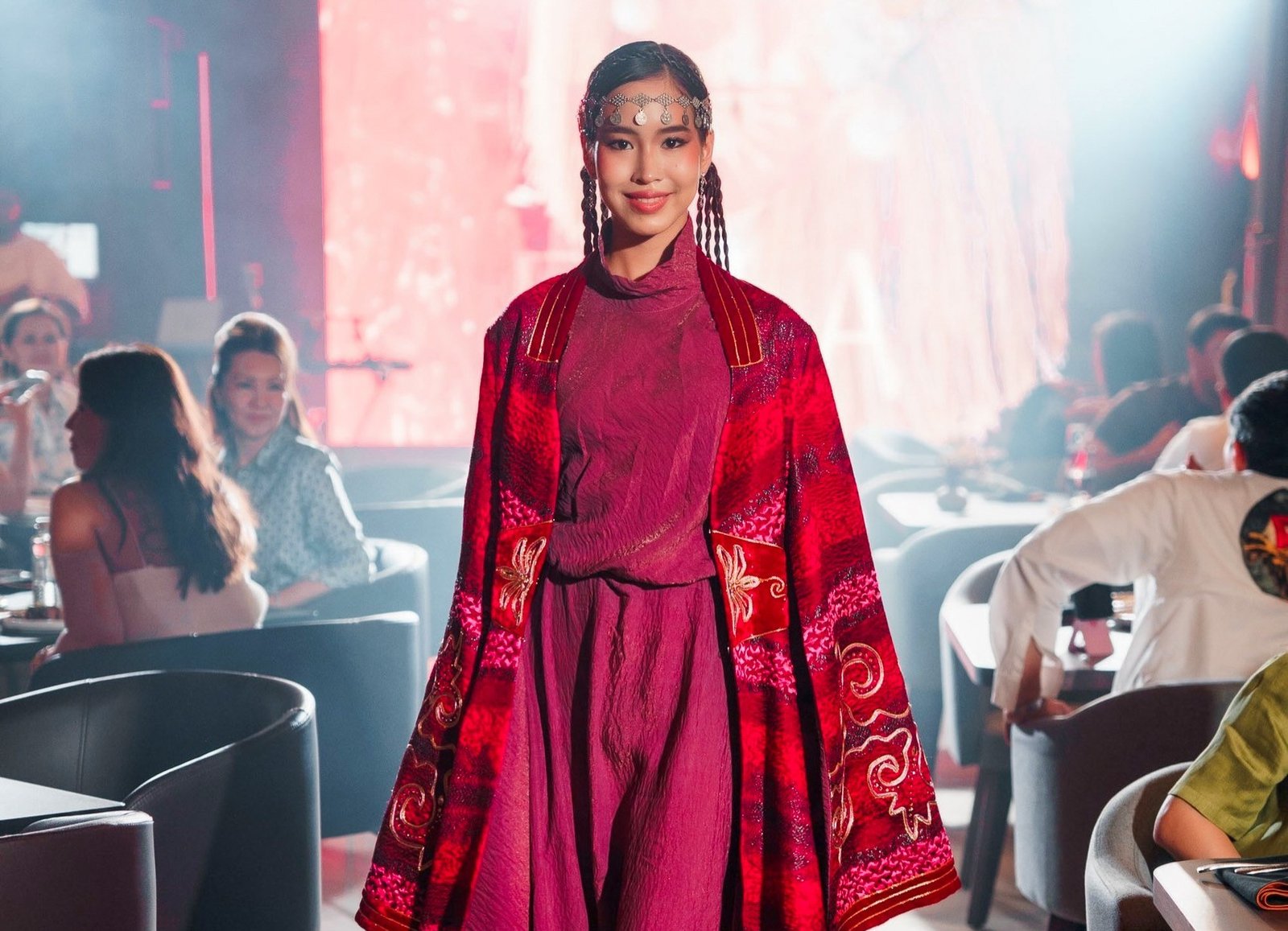
DALA Kazakhstan
Reimagines National Dress for the Modern Astana Wardrobe

Aida Kaumenova — Reimagining Kazakh Heritage Through Contemporary Fashion
Aida KaumeNOVA is a prominent Kazakhstani fashion designer known for blending traditional Kazakh aesthetics with contemporary design. With an early passion for drawing…

Madina Tompiyeva — Reimagining Kazakh Identity Through Contemporary Fashion
For Madina Tompiyeva, fashion is not simply about clothing. It is a way of exploring identity, freedom and the relationship between contemporary life and cultural…