

Legendary & Iconic Personalities
Yeldos Smetov
The Golden Legacy of Kazakhstan’s Judo Champion
Three Olympic Games. Three medals. Eight years between a silver in Rio and a gold in Paris — and a return to the tatami no one expected.
Few athletes can claim to have stood on an Olympic podium three times, won a world championship and remained competitive at the highest level for more than a decade. Kazakhstan’s Yeldos Baqtybiaūly Smetov has done exactly that. Competing in the men’s under-60-kilogram division, Smetov has transformed himself from a promising young judoka into one of the defining figures of Kazakh sport. Born on 9 September 1992 in Taraz, in Kazakhstan’s Jambyl Region, Smetov entered the world of competitive judo at a young age. His career has been shaped by discipline, patience and an ability to recover from setbacks. His journey reached its greatest moment at the Paris 2024 Olympic Games, where he defeated France’s Luka Mkheidze in the final to win the gold medal. In doing so, he became the first judoka from Kazakhstan and the wider Central Asian region to win an Olympic gold medal in judo. But Paris was not an isolated triumph. It was the culmination of a career built through years of elite competition, injuries, disappointment and repeated comebacks.
A Champion in the Making
Smetov’s international career began remarkably early. According to the International Judo Federation, he appeared on the World Judo Tour as a teenager, competing at the Warsaw World Cup when he was only 16. His progress through the junior ranks soon established him as one of Kazakhstan’s most promising lightweight judokas. He won a gold medal at the 2010 World Junior Championships and followed it with a bronze at the 2011 edition. In 2012, he joined Kazakhstan’s senior national team, beginning a new chapter in his career. The transition to senior competition was demanding, but Smetov quickly demonstrated that he could compete against established international opponents. His early results included a bronze at the 2013 Asian Championships, a silver at the Samsun Grand Prix and a gold at the European Open in Warsaw. These performances laid the foundation for a breakthrough period that would soon establish him among the world’s elite. His rise was particularly impressive because the 60kg category is one of judo’s most competitive divisions. Success at this level requires explosive movement, technical precision, balance and extraordinary physical conditioning. For Smetov, these qualities became the basis of a fighting style built around speed and tactical intelligence.
The World Champion
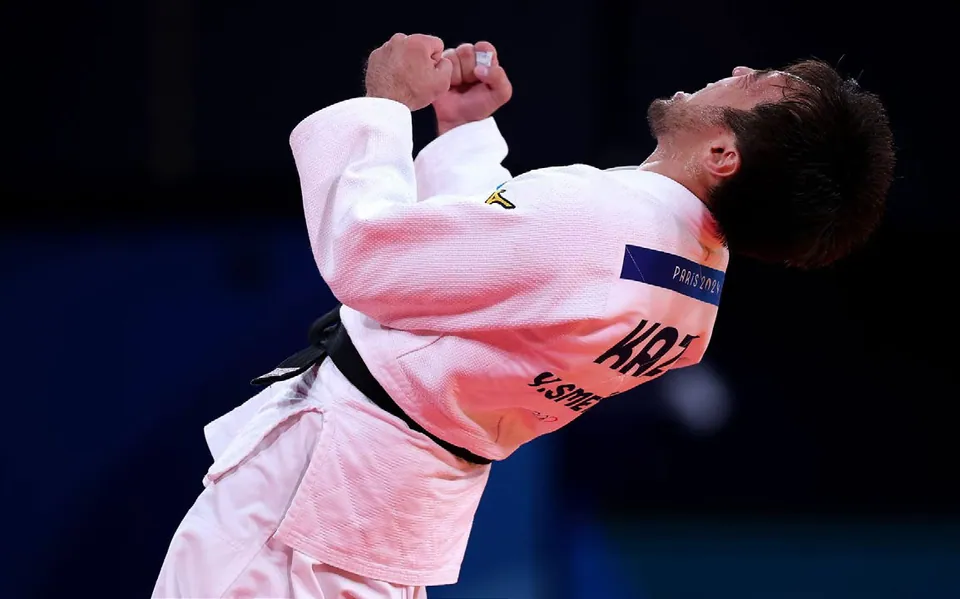
One of the defining moments of Smetov’s early career came at the 2014 Asian Games, where he captured gold in the 60kg division. Two years later, he added another Asian title, winning the 2016 Asian Championships. The biggest breakthrough, however, came in 2015 at the World Championships in Astana. Competing in front of a home crowd, Smetov won the world title and announced himself as one of the strongest judokas in the world. That victory remains a cornerstone of his career. The IJF records Smetov with one World Championship gold, two bronze medals and six World Championship appearances in total. His success also demonstrated something that would become a recurring theme throughout his career: Smetov could perform under immense pressure. Whether competing in Kazakhstan or on the biggest international stages, he consistently found ways to remain composed when the stakes were highest.
“Between his first Olympic appearance in 2016 and his triumph in 2024, eight years passed — years of success, of disappointment, and of refusing to stop.”
Three Olympic Games, Three Medals
Smetov’s Olympic story is particularly extraordinary. At Rio 2016, he reached the final of the men’s 60kg tournament and won silver. The result established him as an Olympic-level star, but the silver medal also left him with unfinished business. At the Tokyo Olympics in 2021, Smetov again reached the podium, this time winning bronze. The result meant he had now collected two Olympic medals, yet the one medal missing from his collection was the one he wanted most. The road to Paris was far from straightforward. Injuries and the physical demands of a long career tested his ability to remain at the top. Smetov has spoken about the importance of allowing his body to recover rather than rushing back into competition. His longevity became as impressive as his medal collection. Then came Paris.
The Golden Moment in Paris
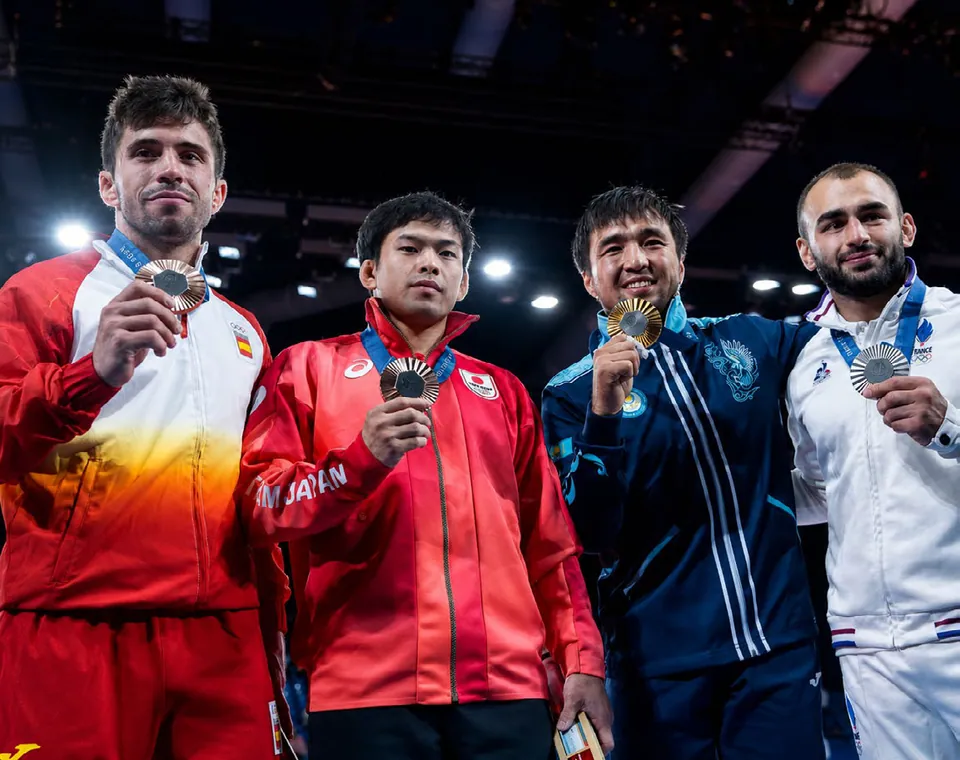
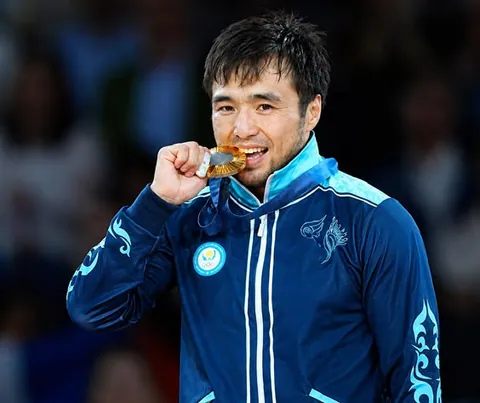
On 27 July 2024, Smetov stepped onto the tatami at the Paris Olympics carrying more than a decade of experience. The 31-year-old had already experienced Olympic success twice, but the gold medal had remained beyond his reach. In Paris, everything came together. Smetov defeated some of the world’s leading competitors on his way to the final, including Chinese Taipei’s Yang Yung Wei in the quarter-final. In the gold-medal contest, he faced France’s Luka Mkheidze, another experienced Olympic medallist. Smetov ultimately prevailed, securing the Olympic title and creating history for Kazakhstan. The victory gave Kazakhstan its first Olympic gold in judo and made Smetov the first Central Asian judoka to win Olympic gold in the sport. The significance went beyond one athlete or one medal. Judo has a long and respected tradition across Central Asia, but Smetov’s achievement placed Kazakhstan at the very top of the Olympic discipline. The IJF described the achievement as the fulfilment of a long-held dream. After the final, Smetov reflected on the years of work, injuries and sacrifices that had led him to Paris. His victory was not simply the product of one successful tournament; it was the reward for sustained excellence over many years.
A Career Built on Resilience
Perhaps the most compelling aspect of Smetov’s story is not the Olympic gold itself, but the persistence required to reach it. Between his first Olympic appearance in 2016 and his triumph in 2024, eight years passed. During that period, he experienced both success and disappointment. He remained among the world’s leading judokas while competing against a new generation of athletes. His longevity is reflected in his overall international record. The IJF currently lists 49 recorded results and 170 contests for Smetov, including 13 gold, seven silver and nine bronze finishes across the competitions recorded in its database. His résumé includes Olympic, World Championship, Grand Slam, Grand Prix and continental success. His ability to remain competitive despite the passage of time has been one of his greatest strengths. Rather than relying solely on physical power, Smetov has developed through experience, tactical awareness and technical maturity. That evolution was particularly visible after his Olympic triumph.
The Champion Returns
Smetov did not simply disappear after achieving the greatest prize of his career. In 2026, he returned to top-level international competition. At the Qazaqstan Barysy Grand Slam in Astana in May 2026, the Kazakhstan Judo Federation celebrated his Olympic journey in front of a home audience. The event included a light-hearted demonstration contest between Smetov and his six-year-old son, Omar, providing a personal glimpse into the life of an athlete whose career has become part of Kazakhstan’s sporting identity. A month later, Smetov competed at the Qingdao Grand Prix in China on 26 June 2026. His return produced an important result: he reached fifth place after defeating Azerbaijan’s Balabay Aghayev, before losing to France’s Enzo Jean in a hard-fought golden-score contest. The IJF described Smetov as looking increasingly comfortable as he continued his return to top level competition. The fifth-place finish is significant because it demonstrates that Olympic champions can continue competing at elite level even after reaching the summit of their sport. As of late July 2026, the IJF listed Smetov at 109th in the -60kg world ranking with 252 ranking points, reflecting his limited recent competition rather than diminishing the importance of his Olympic status.
More Than a Medal
Smetov’s importance to Kazakhstan extends beyond his medal record. His career represents a generation of Kazakh athletes who have helped establish the country as a serious force in international sport. His Olympic gold also carries a wider Central Asian significance. Kazakhstan has a deep sporting tradition, particularly in boxing, wrestling, weightlifting and judo, but Smetov’s achievement gave the region another landmark moment on the Olympic stage. Behind the champion is also a story of family and mentorship. Smetov has credited his long-time coach Galimjan Dzhylgeldeyev, who has worked with him since childhood, as a central figure in his development. He has also spoken openly about the sacrifices involved in maintaining an elite sporting career, including time away from his family and the need to carefully manage injuries. His story therefore resonates beyond the tatami. It is about the patience required to pursue a goal over many years, the courage to return after disappointment and the discipline to continue improving even after achieving success.
A Legacy Still Being Written
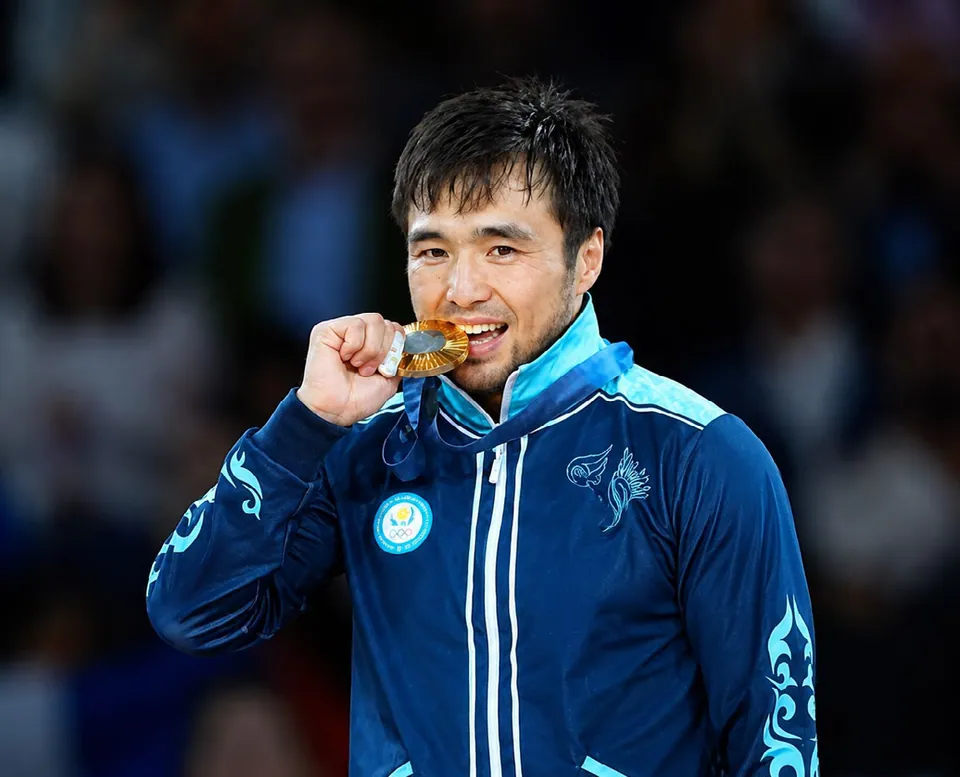
Yeldos Smetov’s career has already earned a place in Kazakhstan’s sporting history. He is an Olympic champion, world champion, Asian champion and a three-time Olympic medallist. Yet his story is still evolving. His return to competition in 2026 suggests that the Olympic champion remains motivated to test himself against the world’s best. Whether his future brings more medals or simply more moments of competition, his greatest achievement is secure. Paris 2024 transformed Smetov from an accomplished champion into a national sporting icon. The gold medal completed an Olympic journey that began with silver in Rio, continued with bronze in Tokyo and finally reached its destination in Paris. For Kazakhstan, the significance is enduring. For Central Asian judo, it is historic. And for Smetov himself, the gold represents the reward for years of sacrifice, resilience and belief. The image of Smetov standing atop the Olympic podium in Paris is therefore more than a photograph of victory. It is the defining image of a career built patiently, fought for relentlessly and ultimately crowned with gold.
Continue exploring
More from Incredible Kazakhstan

Government’s Special Initiatives
Kazakhstan’s Vision for Inclusive Global AI
From the Steppe to Shanghai: A Bid to Shape How the World Governs Artificial Intelligence
Fashion & Trends
Madina Tompiyeva
Reimagining Kazakh Identity Through Contemporary Fashion
History, Culture & Tradition
The Golden Thread
Preserving the Eternal Soul of Kazakhstan for the Global Stage