

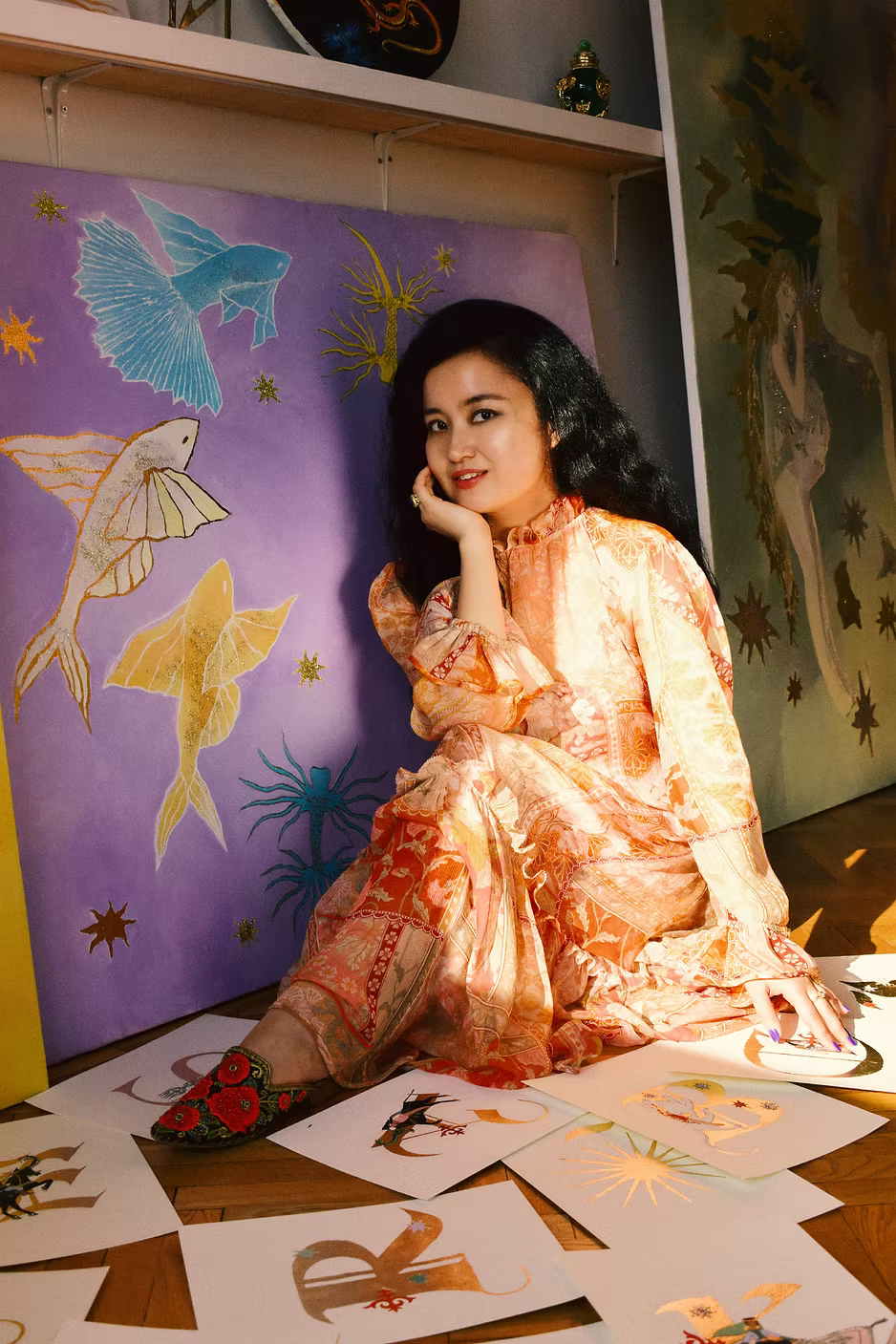
Kazakh Artist — Brings Traditional Culture to Life Through Art & Design
Kazakh artist Indira Badambayeva has become one of the most recognizable creative voices in Kazakhstan by successfully combining traditional cultural heritage with contemporary art and design. Through her paintings, illustrations, postcards, silk scarves, and commercial collaborations, she has created a distinctive artistic world that celebrates Kazakh identity while making it accessible to a wide audience. Her work is inspired by folklore, fairy tales, traditional ornaments, language, and cultural symbols, all of which she transforms into modern visual expressions that resonate with people both inside and outside Kazakhstan. Badambayeva’s journey as an artist began at a young age. Unlike many people who discover their careers later in life, she knew from childhood that art would be her future.

By the age of 11, she had already decided that she wanted to pursue a creative profession and could not imagine herself doing anything else. This strong sense of purpose shaped her lifestyle and guided many of her decisions. While others spent time socializing, attending celebrations, or exploring different interests, she devoted herself almost entirely to artistic development. She spent countless hours drawing, painting, and refining her skills, believing that mastery in art requires complete dedication and discipline. Her formal artistic education came through Abai Kazakh National Pedagogical University, where she specialized in easel painting. The years she spent studying classical painting laid the foundation for everything she would later achieve.
Classical training taught her not only technical skills but also patience, discipline, and a deep understanding of artistic principles. These experiences helped shape her creative identity and prepared her for a professional career in the arts. Success arrived early for Badambayeva. At just 20 years old, she organized her first solo exhibition, an important milestone for any young artist. The exhibition proved to be highly successful, with more than half of the paintings sold on the opening day. This early achievement demonstrated that her work connected with audiences and gave her confidence to continue pursuing her artistic ambitions. Following graduation, she continued to exhibit her paintings and participate in major artistic projects, gradually building a reputation within Kazakhstan’s creative community.
Although she was deeply committed to her education, Badambayeva was never afraid to challenge systems she felt were not serving artists properly. During her university years, she openly expressed concerns about changes that affected the quality of artistic training. She recalled protesting when the art academy was relocated to a building she believed was unsuitable for serious art education. However, her criticism was never an excuse for avoiding work. Instead of spending time on leisure activities, she often stayed home and painted for long hours. For her, discipline was not about blindly following rules but about remaining committed to continuous improvement and artistic growth. One of the most notable aspects of Badambayeva’s philosophy is her belief in personal responsibility and independence.

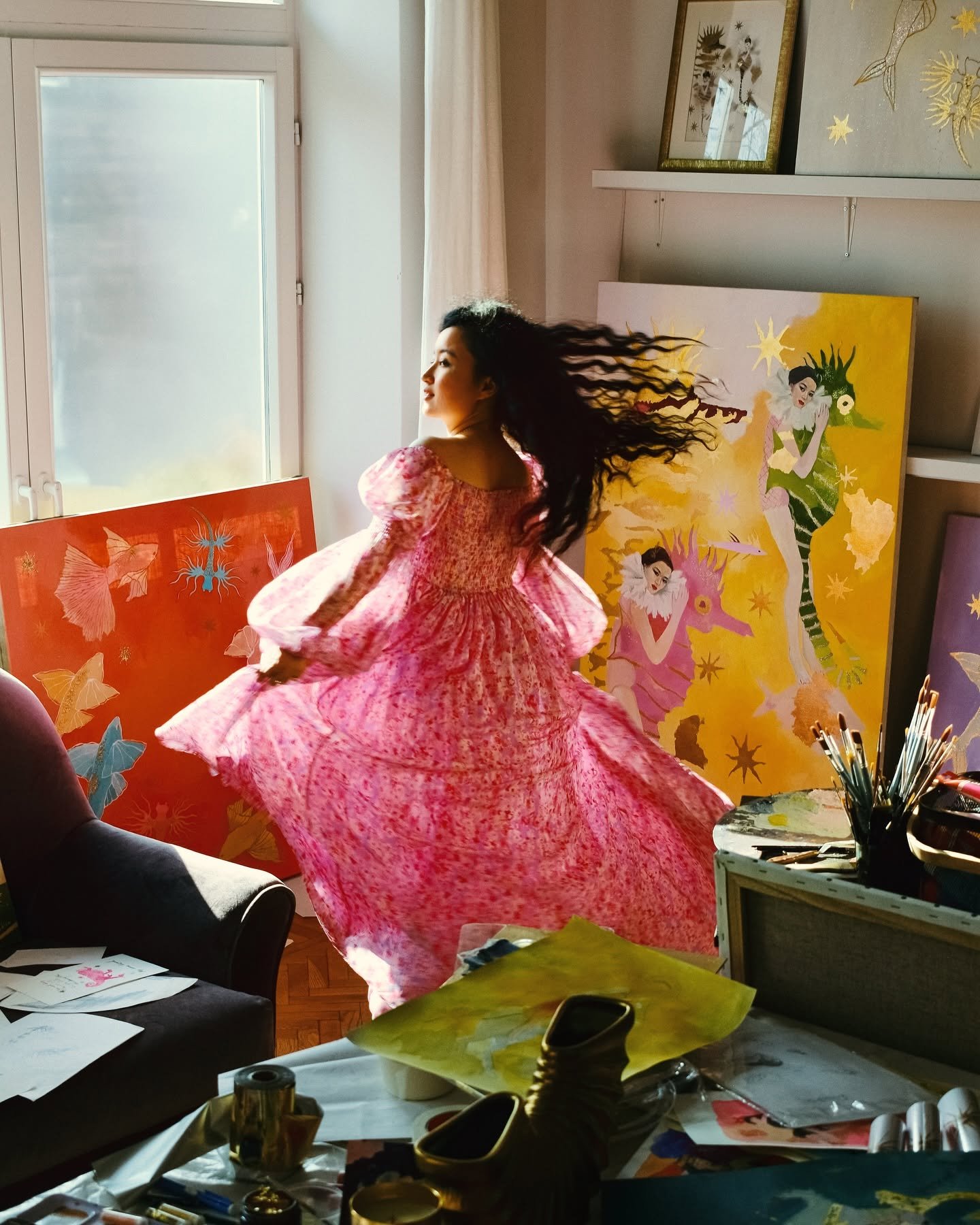
She rejects the traditional stereotype of the struggling artist who depends on others for support. In her view, talent alone is not enough to build a successful career. Artists must also learn how to manage the practical side of their profession, including marketing, sales, and business development. She believes that waiting for an agent, patron, or sponsor to create opportunities is a mistake. Instead, artists should actively take control of their own careers and learn the skills necessary to sustain themselves professionally. This mindset has played an important role in her success and has helped her build a career on her own terms. Over time, Badambayeva began exploring creative fields beyond painting. Photography became one of her interests because it allowed her to capture beauty in a more immediate way.

While a painting may take days or weeks to complete, photography can communicate emotion and character instantly. This exploration expanded her understanding of visual storytelling and opened new possibilities for artistic expression. Her willingness to experiment eventually led her into the world of design, where she found new ways to bring art into everyday life. Among her most successful projects is a collection of illustrated postcards that has become widely popular throughout Kazakhstan. The idea emerged from her desire to create beautiful and inspiring representations of Kazakh people. Growing up, she often felt that illustrations of Kazakhs did not accurately reflect their beauty or cultural richness. Through her artwork, she sought to change that perception.


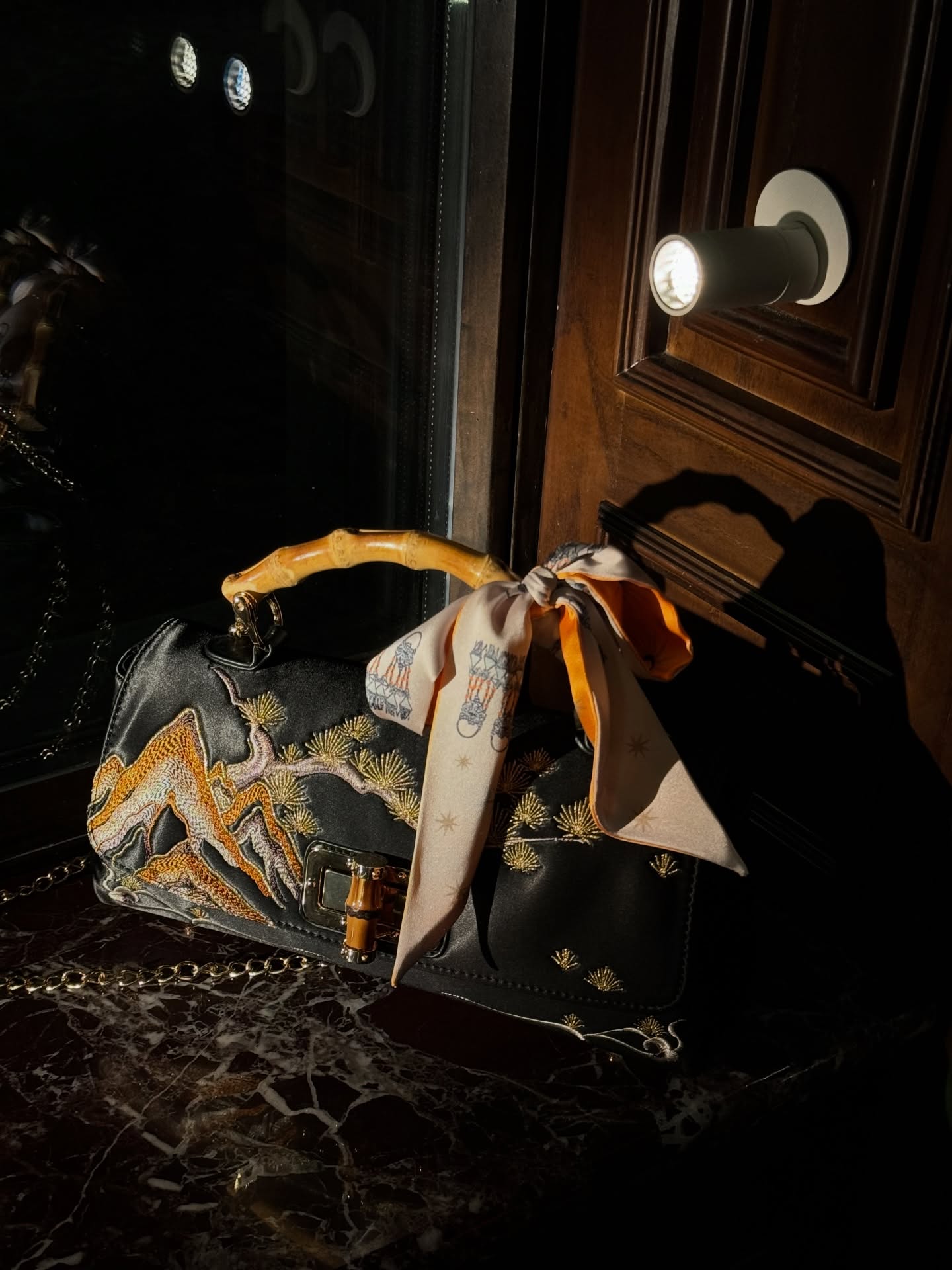
Her postcards feature elegant and expressive characters that celebrate Kazakh identity in a positive and contemporary way. These postcards have become especially meaningful because they are often exchanged during important life events such as weddings, birthdays, anniversaries, and other celebrations. For Badambayeva, knowing that her artwork accompanies people during special moments makes the project particularly rewarding. Another major milestone in her career was the creation of her silk scarf collections. Designing scarves had long been one of her ambitions, but it became possible only after she established her own showroom. She chose accessories because they are versatile and inclusive, allowing people of different ages and styles to enjoy her designs. Unlike clothing, which often requires specific sizing and tailoring, scarves can be worn in many ways and adapted to different lifestyles.
Her silk scarves feature intricate illustrations inspired by Kazakh ornaments, folklore, cultural symbols, and fairy tales. Produced locally in small batches, they combine artistic creativity with practical everyday use. One of her most innovative projects is the Kazakh Alphabet collection. In this series, each letter of the alphabet is paired with a cultural symbol that represents an important aspect of Kazakh heritage. The project reflects her fascination with language, books, and storytelling, interests that have been part of her life since childhood. Through these scarves, she aims to preserve and promote Kazakhstan’s cultural identity while creating visually engaging works of art. The collection serves as both a fashion accessory and a celebration of national heritage, connecting language, memory, and artistic expression.
Badambayeva’s artistic style reflects a wide range of influences. While Kazakh ornaments and cultural themes remain at the center of her work, she also draws inspiration from European decorative traditions, Gothic lettering, and classic animation. She has often spoken about the influence of early Walt Disney cartoons on her artistic development. These animations shaped her understanding of color, proportion, character design, and visual storytelling. Rather than copying these influences directly, she combines them with her own cultural background to create a style that is uniquely her own. One of the most significant collaborations of her career came through Air Astana, Kazakhstan’s national airline. After nearly two years of discussions and planning, she was selected as one of five artists to create designs for the airline’s exclusive travel amenity kits.


Her artwork now travels across international routes, introducing passengers from around the world to contemporary Kazakh art and culture. What might otherwise be a simple travel accessory becomes a small cultural ambassador, reflecting the beauty and creativity of Kazakhstan. Throughout her career, Badambayeva has remained committed to independence. She has built her business gradually without relying on investors, loans, or external financial support. While this approach may result in slower growth, it allows her to maintain creative freedom and stay focused on projects that align with her values. For her, success is not measured by fame or prestigious associations but by the ability to create meaningful work that reflects her artistic vision and cultural heritage.

Today, Indira Badambayeva stands as an example of how traditional culture can be transformed into contemporary art without losing its authenticity. Through her paintings, illustrations, accessories, and collaborations, she has created a body of work that celebrates Kazakhstan’s history, language, and identity while reaching modern audiences. Her journey demonstrates that artistic success comes not only from talent but also from discipline, perseverance, independence, and a deep commitment to preserving and sharing cultural heritage. By bringing Kazakh symbols and stories into everyday life, she continues to inspire audiences and contribute to the growing global appreciation of Kazakhstan’s creative culture.
More to Read
All issues
Chopard Brings the Brilliance of L’Heure du Diamant to Kazakhstan
Swiss luxury Maison Chopard is bringing the artistry of high jewellery and fine watchmaking into focus in Kazakhstan with the presentation of its celebrated L’Heure du…

Samsung Unveils Next-Generation AI Television Lineup in Kazakhstan
Samsung Electronics is strengthening its television portfolio in Kazakhstan with its new generation of AI-powered displays, bringing intelligent viewing technologies to…

Beauty Served with Taste — Dragonfly Izakaya & Paula’s Choice Bring Gastronomy & Skincare Together
The boundaries between gastronomy, beauty and lifestyle are becoming increasingly fluid, giving rise to collaborations that transform familiar experiences into something…