




Intl. Standard Education
The AI Classroom Era
Kazakhstan Reinvents Education for the Future
One of the most ambitious education reforms in Central Asia, treating artificial intelligence not as a gadget but as an investment in human capital.
Kazakhstan is embarking on one of the most ambitious education reforms in Central Asia, placing artificial intelligence at the heart of its national school system. Rather than viewing AI as simply another technological innovation, the country is treating it as a strategic investment in human capital, educational quality, and long-term economic competitiveness. Through a carefully phased implementation plan, Kazakhstan aims to transform classrooms into intelligent learning environments where every student receives personalized educational support while teachers gain powerful digital tools to enhance instruction. The initiative reflects the country’s broader vision of becoming a knowledge-driven economy capable of competing in the rapidly evolving global digital landscape. By integrating AI into secondary education, Kazakhstan hopes to create a future-ready workforce equipped with advanced digital skills, critical thinking abilities, and technological literacy that will support innovation across every sector of the economy.
A National Vision for AI-Driven Education
Artificial intelligence is becoming a central pillar of Kazakhstan’s educational modernization strategy. Following a presidential directive supporting the integration of AI into secondary education, government agencies have developed a comprehensive roadmap covering the years ahead. The plan extends beyond introducing new software into classrooms; it seeks to redesign the educational ecosystem by combining intelligent technologies, improved teaching practices, modern digital infrastructure, and strong data protection standards. Education officials describe the initiative as an essential component of the country’s long-term development strategy. By introducing AI at an early stage of education, Kazakhstan hopes to nurture digital talent from childhood, preparing students for careers that increasingly depend on automation, advanced analytics, and intelligent technologies. The programmed also aligns with Kazakhstan’s wider digital transformation agenda, which includes expanding digital government services, supporting innovation ecosystems, and attracting investment in emerging technologies such as artificial intelligence, cloud computing, robotics, and advanced manufacturing.

Phased Rollout Across Schools
The AI implementation will begin through carefully managed pilot programmed before expanding nationwide. Initial testing will focus on a small number of rural schools, allowing educators and technology specialists to evaluate the effectiveness of AI-powered learning systems in diverse educational environments. These early pilot schools have been selected from different regions to ensure that the technology can operate effectively even where educational resources are more limited. Lessons learned during this phase will help refine both the technology and teaching methods before broader deployment. Following successful trials, the programmed will gradually expand to hundreds of schools, reaching approximately 500 educational institutions during the next stage. Although this represents only a portion of Kazakhstan’s school network, it provides a scalable foundation for future nationwide adoption. The phased strategy allows authorities to strengthen infrastructure, train teachers, improve connectivity, and address operational challenges before AI becomes a standard component of classroom learning.
“This adaptive approach enables every learner to progress according to individual ability rather than being restricted by a one-size-fits-all curriculum.”
Personalized Learning for Every Student
One of the most significant advantages of artificial intelligence lies in its ability to adapt education to the individual needs of each learner. Traditional classrooms often require teachers to deliver identical lessons to students with widely varying learning abilities and academic progress. AI changes this model by continuously analyzing each student’s performance and recommending personalized learning pathways. The intelligent systems will monitor learning pace, identify strengths and weaknesses, and recommend customized exercises that suit each student’s needs. Students requiring additional support will receive targeted explanations, extra practice materials, and interactive guidance designed to reinforce difficult concepts. Meanwhile, high-performing learners can move beyond standard classroom material through more advanced assignments and challenging activities that encourage deeper understanding and creativity. This adaptive approach enables every learner to progress according to individual ability rather than being restricted by a one-size-fits-all curriculum.
Building Digital Skills from an Early Age
Kazakhstan’s AI education initiative is not limited to improving academic performance. It also seeks to prepare students for participation in an increasingly digital economy. Primary school students will begin learning the responsible and safe use of digital technologies while becoming familiar with AI-assisted educational tools. As students’ progress through higher grades, greater emphasis will be placed on computational thinking, digital literacy, data interpretation, problem-solving, and analytical reasoning. The curriculum is expected to encourage students to understand how artificial intelligence functions, recognize its capabilities and limitations, and use digital tools ethically and responsibly. These competencies are becoming increasingly valuable as industries worldwide adopt AI-powered technologies across healthcare, finance, manufacturing, logistics, agriculture, scientific research, and public administration.
Teachers Remain at the Centre of Learning
Although artificial intelligence will become an important classroom assistant, Kazakhstan has repeatedly emphasized that teachers will remain the foundation of education. Rather than replacing educators, AI will function as a supportive partner that reduces repetitive administrative tasks and enables teachers to devote more attention to instruction, mentorship, and student development. Intelligent systems can assist educators by preparing lesson plans, generating differentiated assignments, analyzing assessment results, and identifying students who require additional support. These capabilities allow teachers to spend more time engaging directly with students instead of managing routine paperwork. Recognizing that successful AI adoption depends on teacher confidence, Kazakhstan has already invested heavily in professional development. Hundreds of thousands of educators have completed AI-related training programmed designed to help them integrate intelligent technologies into everyday classroom practice while maintaining high educational standards.
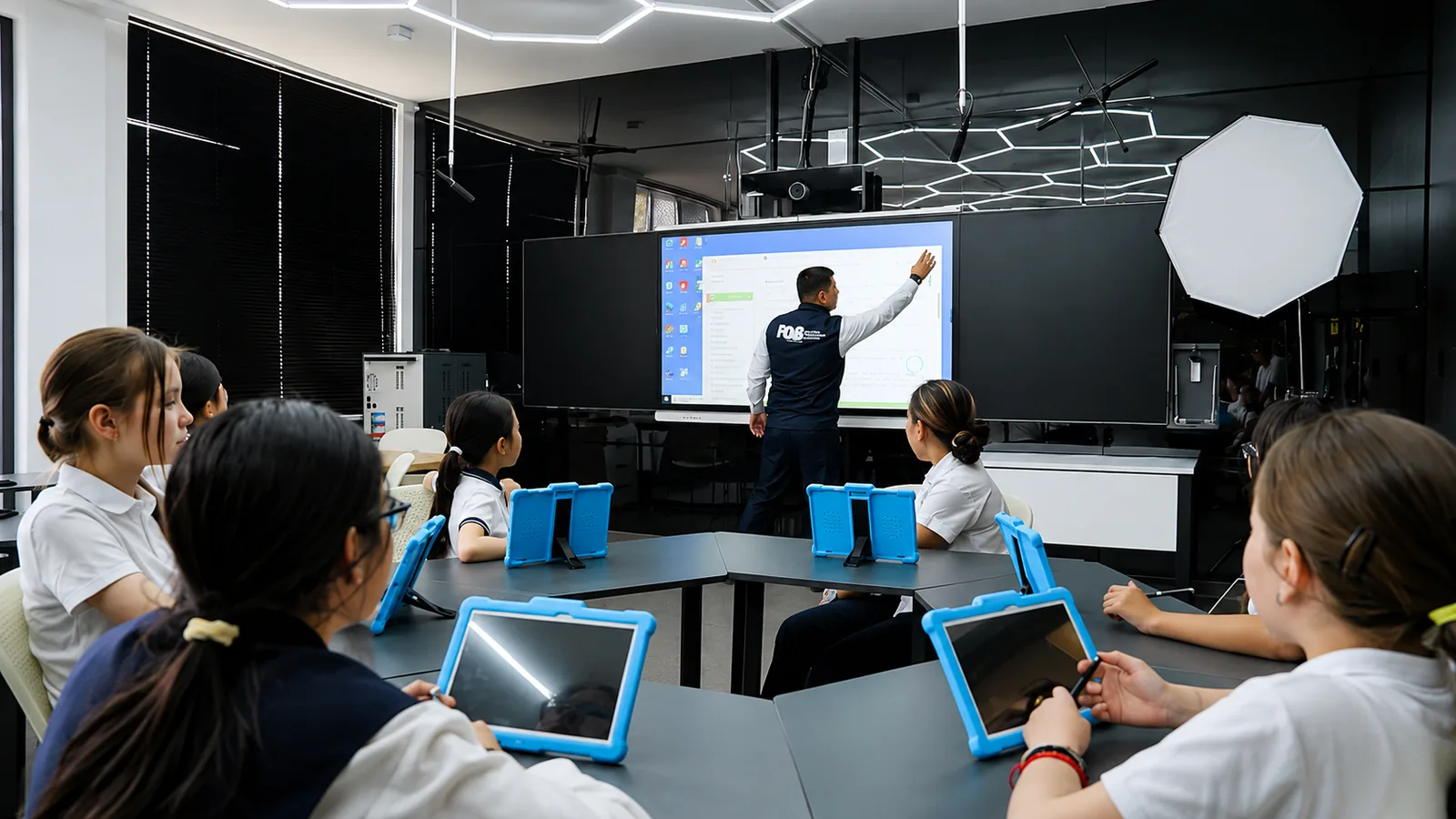
Additional specialized training will continue as new schools join the programme.
Bridging the Urban-Rural Education Gap
Reducing educational inequality remains one of the programme’s most important objectives. Many rural schools continue to face shortages of qualified teachers, limited access to specialized learning resources, and varying levels of digital infrastructure. AI-powered educational platforms have the potential to narrow these disparities by providing students with high-quality learning support regardless of geographic location. Government agencies have already assessed internet connectivity, technical equipment, staffing capacity, and digital readiness across participating schools. Infrastructure improvements, including enhanced connectivity and upgraded classroom technology, will accompany the AI rollout to ensure rural communities can fully benefit from the initiative.
“Another important focus is teaching students to become thoughtful users of AI rather than passive consumers of machine-generated information.”
If successfully implemented, AI could help provide more consistent educational opportunities throughout Kazakhstan, ensuring that students from remote regions receive learning experiences comparable to those available in major cities.

Responsible AI & Strong Data Protection
As artificial intelligence becomes more deeply integrated into education, Kazakhstan is placing considerable emphasis on ethical use, cybersecurity, and student privacy. Authorities are developing standards that govern how AI systems operate within schools, ensuring educational content remains age-appropriate, culturally relevant, and aligned with national curriculum requirements. Strict regulations will oversee the collection, storage, and processing of students’ personal information while safeguarding academic integrity. Another important focus is teaching students to become thoughtful users of AI rather than passive consumers of machine-generated information. Students will learn how to verify facts, identify misinformation, evaluate multiple sources, recognize AI-generated content, and understand the limitations of intelligent systems. These critical thinking skills are increasingly important in an era where generative AI tools can rapidly produce convincing but sometimes inaccurate information. By combining technological literacy with ethical awareness, Kazakhstan aims to foster responsible digital citizens capable of navigating the opportunities and challenges presented by artificial intelligence.
Supporting Economic Growth Through Education
The full economic benefits of Kazakhstan’s AI education initiative will emerge over many years rather than immediately. Government planners view today’s investment in intelligent classrooms as the foundation for tomorrow’s innovation economy. As digitally skilled graduates enter universities and the workforce, they are expected to strengthen Kazakhstan’s competitiveness across knowledge-intensive industries. A workforce equipped with AI literacy, analytical reasoning, and advanced technological capabilities can contribute to higher productivity, increased innovation, stronger entrepreneurship, and improved national competitiveness. Over time, these gains may support economic diversification, attract international investment, generate higher-value employment opportunities, and reduce shortages of skilled professionals in emerging industries. By aligning education with future labor market demands, Kazakhstan is positioning itself to participate more actively in the global digital economy while building sustainable long-term growth.
A Blueprint for Future-Ready Learning
Kazakhstan’s decision to integrate artificial intelligence into its education system represents far more than a technological upgrade. It reflects a comprehensive vision for preparing future generations to thrive in a rapidly changing world where digital intelligence, adaptability, and lifelong learning are becoming essential skills.

Through personalized education, teacher empowerment, responsible AI governance, and expanded digital access, the country is laying the foundations for an education system designed for the twenty-first century. While challenges related to infrastructure, privacy, and implementation will require continued attention, the initiative demonstrates Kazakhstan’s determination to place innovation at the centre of national development.
As classrooms become increasingly intelligent and learning becomes more personalized, Kazakhstan is taking a significant step toward building a resilient, digitally empowered society capable of shaping its own future in the age of artificial intelligence.
Continue exploring